An outdoor cinema screening is staged by assembling a temporary theater: a screen raised against ambient light, a projection system bright enough to compete with dusk, a speaker array calculated for open-air dispersion, and a site with power, access and a permit. Unlike a cinema, nothing exists before the build day and nothing remains after it. Per technical specifications published by outdoor screening equipment suppliers and event production companies, every element — from screen anchoring to sound delay timing — is engineered for a site that was never designed to show films.
What kind of screens are used outdoors?
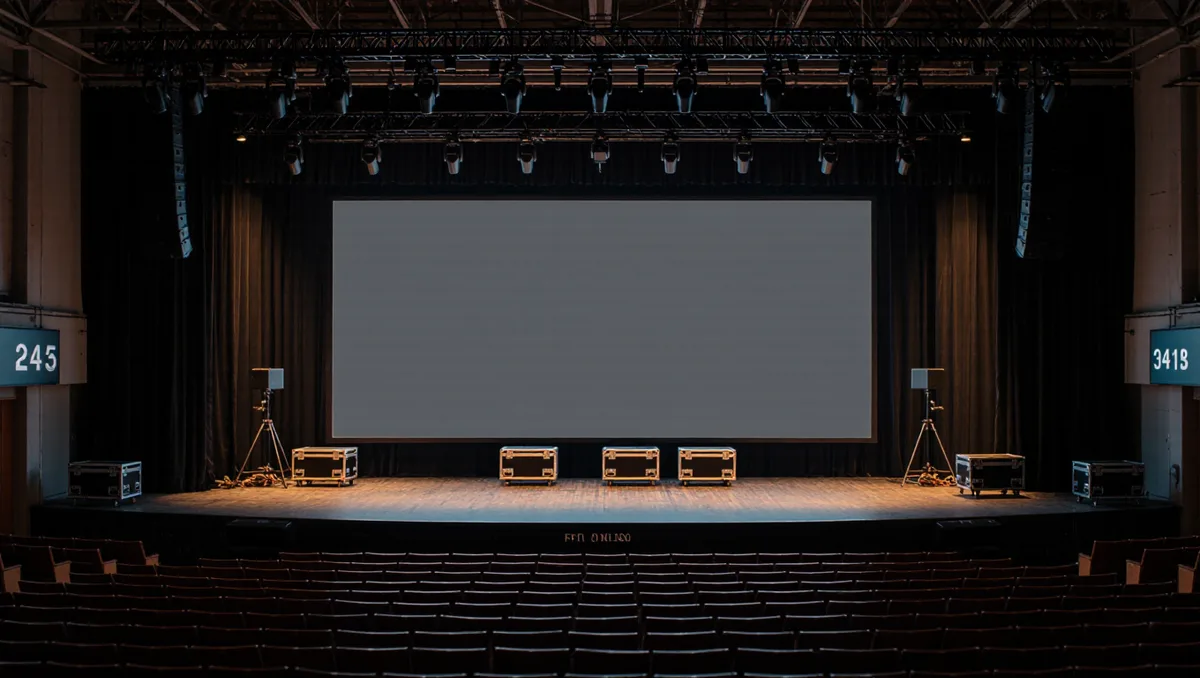
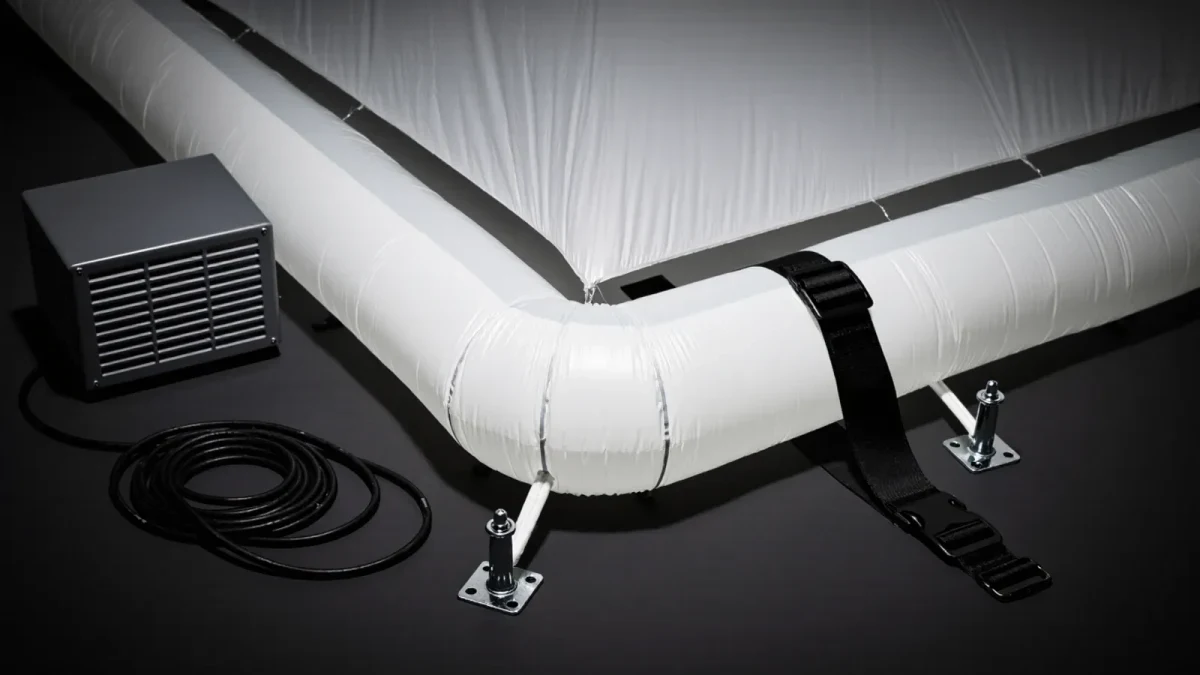
Three dominant types. Inflatable screens — a fabric surface tensioned on an air-filled frame — are the festival workhorse because they erect in hours and pack into a van. Modular truss screens, built from aluminum framing with tensioned projection fabric, suit permanent-feeling seasonal series. For sites with daytime programs or high ambient light, LED walls replace projection entirely, trading brightness for cost and power draw. Per supplier documentation, screen size is matched to audience distance: a viewer at the back row should see the image at a defined minimum angle, which sets the screen height for a given field size.
How bright does the projector need to be?
Bright enough to survive twilight, which is measured in lumens against the screen area. Outdoor events typically start at civil dusk, when the sky darkens enough for a projected image to hold contrast, per scheduling practice described by open-air cinema operators. Professional installations run high-output projectors in the tens of thousands of lumens, with content graded so the image does not wash out in the first half hour. The scheduled start time printed on the ticket is really an astronomy calculation.
How is sound handled in an open field?
With delay towers and distance math. Sound travels slowly enough that speakers far from the screen would land out of sync with the image, so arrays are placed at intervals and time-aligned, with each tower delayed to match sound speed over its distance. Per audio engineering practice for outdoor events, coverage is mapped before the build to avoid dead zones and to keep sound from spilling past the site boundary — a common condition of the noise permits that govern these events.
- Inflatable screens erect in hours and dominate festival staging.
- Start times are set by dusk, not by programming preference.
- Delay towers keep sound synchronized across a large field.
- Wind ratings and a rain plan are written into the production risk assessment.
What about weather?
It is the governing risk, and it is planned in writing. Screens carry wind ratings — inflatable screens are stood down at specified wind speeds, and storms end shows outright — per safety guidance supplied by screen manufacturers and event insurers. The production risk assessment sets trigger points for wind, lightning and rain, and the refund or rescheduling policy is published in advance so the audience knows what a ticket promises. Heat has its own protocol: summer series add shade, water stations and adjusted start times in documented hot-weather procedures.
What permits does an outdoor screening need?
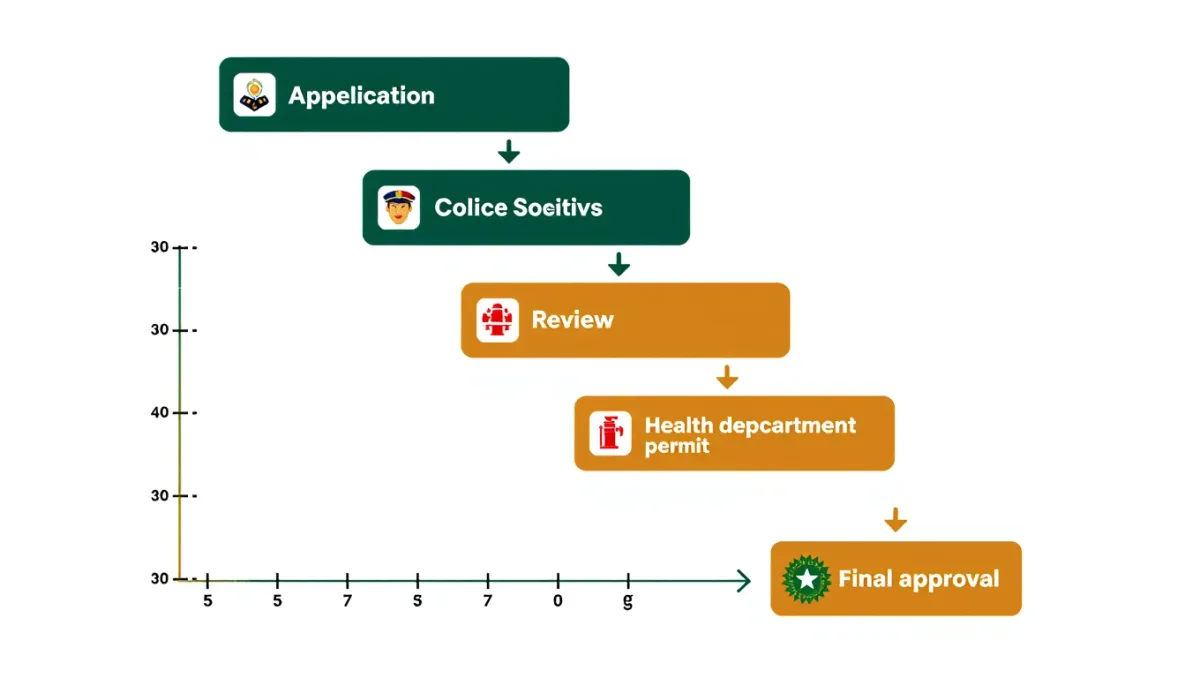
A stack of them. Film licensing is the first layer — public exhibition rights are cleared with the distributor for each title. Site permits from the park authority or municipality cover occupation, power, noise and crowd management; licensed premises rules apply if food and alcohol are sold. Per municipal special-event permitting guidance in major cities, applications are filed weeks ahead with site plans, insurance certificates and, for large audiences, safety and medical provisions. Free public series run by cities add procurement rules on top, since they are public contracts.
How are licensing and content handled?
Title by title. Organizers negotiate public performance licenses with distributors or rights holders, paying fees that vary with audience size, admission and exclusivity. Programming an outdoor season is shaped by the license market as much as by taste: new releases cost more and carry conditions, while repertory classics are cheaper and, per operators of seasonal series, reliably draw crowds who come for the setting as much as the film. Some formats — silent-cinema-with-headphones nights — exist partly to solve the noise-permit problem rather than the aesthetic one.
What does the audience experience of the build look like?
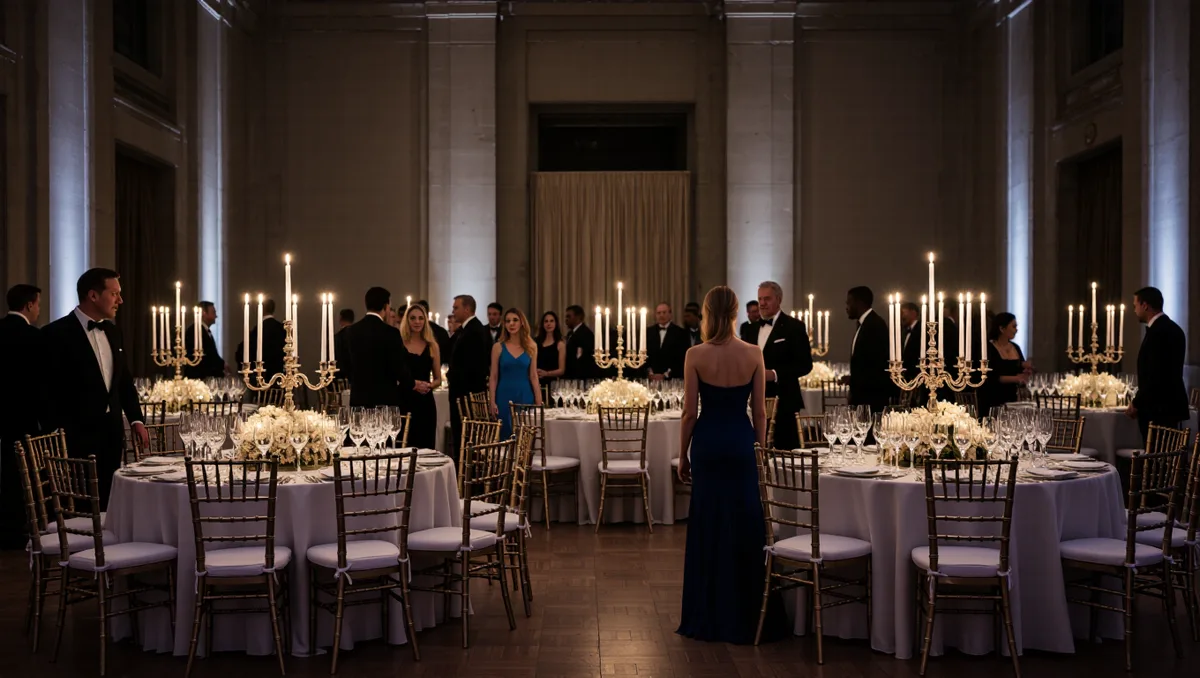
Very little, by design. The screen inflates through the afternoon, the audio crew time-aligns towers through a test signal, front-of-house marks seating zones, and food vendors arrive under separate permits. The operational day ends with a strike that folds the entire cinema back into trucks. Per operations schedules used by touring outdoor cinema companies, a full build-strike cycle can fit inside a single day, which is what allows one operator to serve a different park every night of a summer.
Why do cities and brands keep funding these?
Because an outdoor screening converts public space into programmed cultural use at modest cost. Municipalities fund free series as summer programming with measurable attendance; brands sponsor them for captive, relaxed audiences; and rights holders license into a demand stream that costs them nothing to service. The format's fragility — weather, dusk, permits — is also its charm: a cinema that exists only tonight is the oldest marketing hook in the business.
How is power delivered to a field or a plaza?
Either by generator or by tapping municipal supply under permit. Projection, audio, concession and site lighting for a mid-size screening draw far more than a household circuit, and production power plans distribute it through weatherproof cabling and residual-current protection, per event power practice. Urban plaza series often negotiate a connection to city infrastructure with the utility, while park events run silent generators positioned to keep noise away from the speaker array. Power is also the first thing the weather plan protects: rain procedure is less about the screen than about keeping water out of distribution boards.
How do operators handle seating and capacity?
By defining it before selling it. Some series are bring-your-own-blanket and loosely counted; ticketed events fence the site, lay out rows or zones, and manage capacity against the site permit’s occupancy limit, per crowd-management guidance in municipal special-event rules. Overflow control matters most at free screenings, where attendance can exceed estimates on a warm evening — experienced operators add staffing and radios precisely because the free model removes the ticket count as a planning instrument.