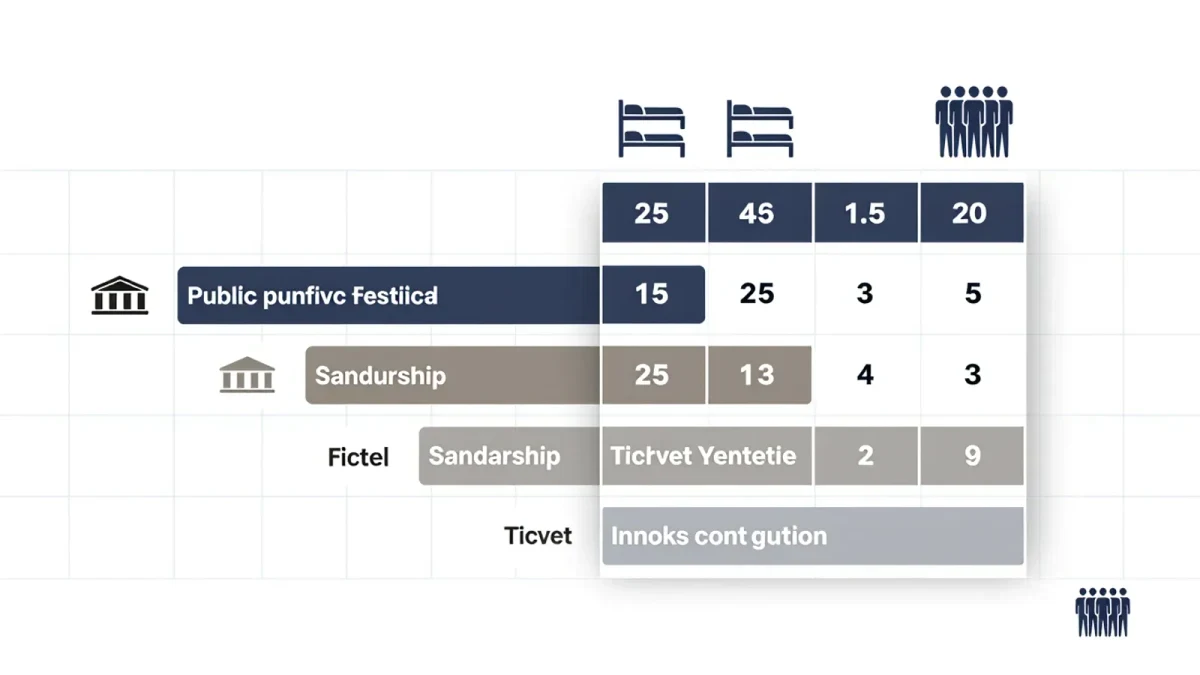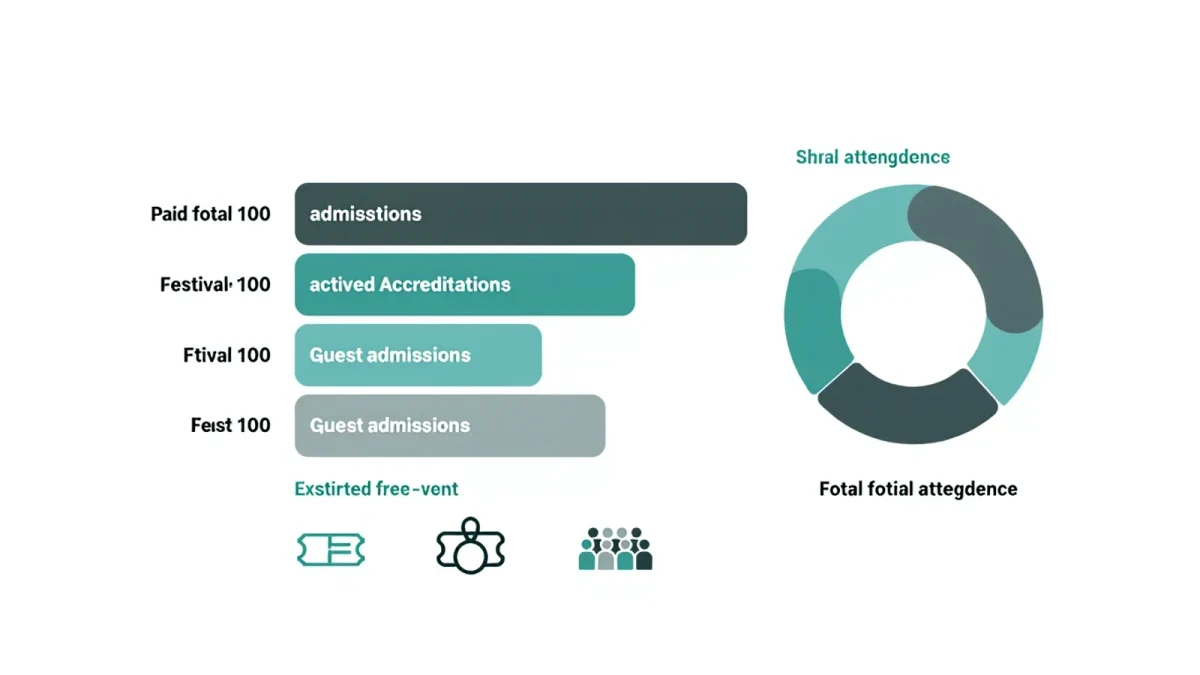
Festivals measure attendance by compiling separate counts — ticketed admissions, accreditation holders, guest admissions and estimates for free public programming — into a total published in the closing report. The headline number is official in the sense that the festival certifies it, and its underlying composition varies by event: a ticket-driven festival's figure is a box-office count, while a festival with large free outdoor programming includes an estimate whose methodology is rarely visible in the press release. Per published final reports from major festivals, the credible figures name their components; the weak ones print one large number and stop.
How is ticketed attendance counted?
Directly, at the point of entry. Paid admissions are recorded by ticketing systems, and venue staff count entries at the door for both ticketed and pass access, per standard box-office practice. This produces the cleanest stream: admissions are individual, timestamped and auditable against ticket inventory. Festivals with allocated seating report seat occupancy rather than tickets sold, which is why final reports distinguish admissions from box-office gross — a sold-out festival and a full festival are two different measurements.
What about accredited attendees?
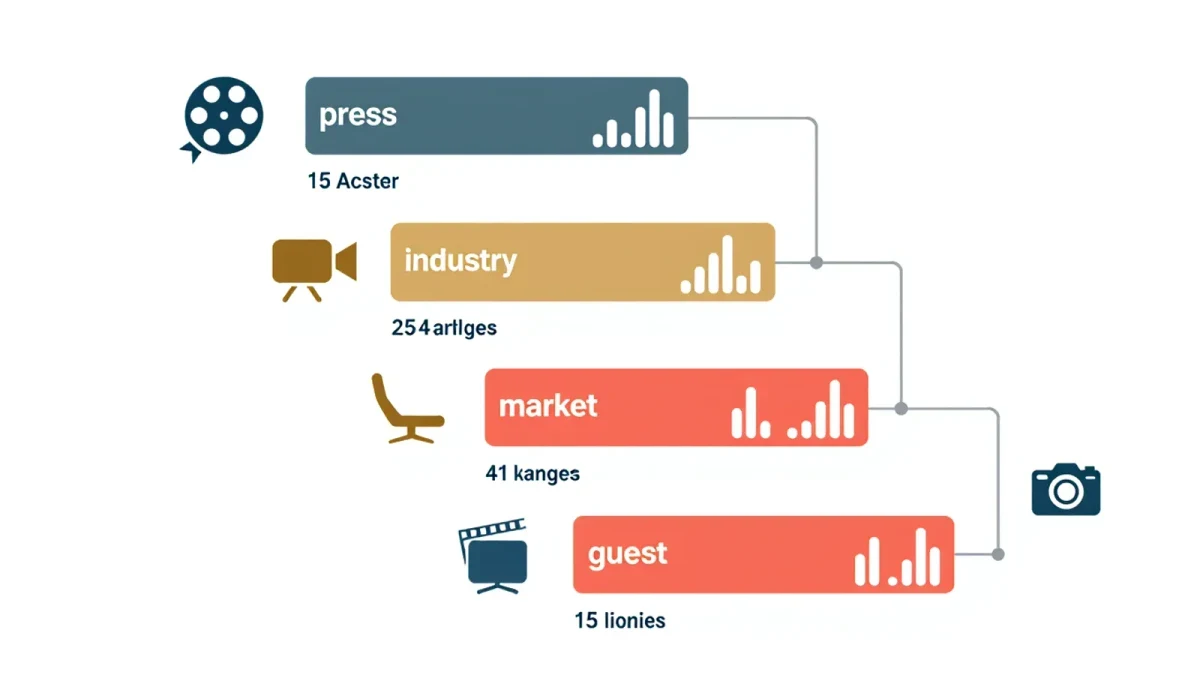
They are counted through badge issuance and activation. Press, industry and guest badges are issued against quotas, and festivals count activated credentials — badges actually picked up and used — rather than approvals, per accreditation-office practice described in festival documentation. These attendees are admitted to many screenings on the credential, so festivals report them as a distinct population rather than folding them into admissions, and the serious ones note when a single badge holder generates dozens of screening entries that are not counted as admissions at all.
- Ticketed admissions are counted at entry and audited against ticketing systems.
- Accredited attendance counts activated badges, not approvals.
- Free public events rely on crowd estimation methods and are disclosed as estimates.
- Final reports reveal whether the headline figure is admissions, admissions-plus-accreditation, or reach.
How do festivals count free outdoor events?
By estimation, with methods ranging from systematic to impressionistic. Common approaches count entries through defined gates, sample crowd density over marked areas and extrapolate, or combine venue capacity with observed fill rates per event, per crowd-estimation practice used by event organizers and public agencies. Density estimation is genuinely difficult — trained observers can disagree substantially on the same crowd — and festivals that publish free-event attendance responsibly label it an estimate and name the method. Those that do not are printing a guess in a larger font.
Why do festivals announce records?
Because attendance is the metric their funders accept. Public subsidies, sponsor renewals and host-city agreements all lean on growth evidence, and the closing-report record — highest admissions ever, most accredited countries, largest outdoor audience — is the simplest proof the event is thriving. Per festival final reports and the funding documents that cite them, the figures flow directly into the next cycle's budget justifications. This does not make the numbers dishonest; it makes the incentive to choose generous methodologies structural, which is why method disclosure is the reader's only defense.
What questions should a reported figure survive?
Four. Does the total name its components — paid admissions, accredited attendees, estimated free audiences — or collapse them? Does it count admissions or reach, where reach includes online views and streaming, a figure several festivals added in recent reports, per their own closing statements? Is the free-event portion labeled an estimate with a method? And is the number consistent with prior years, or did the definition quietly change? A figure that answers all four is usable. A figure that answers none is public relations.
How has reporting changed?
It has widened. Festivals that once counted only cinema admissions now publish multi-part figures that add online platform views, streaming windows and social reach, per recent final reports. The expansion reflects real audience change, but it complicates comparison: a million online views from a badge-carrying journalist's clip is not the same fact as a million seats occupied. The most rigorous festivals publish their digital metrics with their own methodology notes, exactly as they do for physical admissions.
Who audits any of this?
Almost no one externally, with exceptions. Ticketed box office is internally auditable and in some markets subject to consumer-protection oversight of ticketing itself, but attendance totals as published are management figures, verified by the festival rather than an outside body. Publicly funded festivals answer, eventually, to their institutional boards and ministries through annual reports, where numbers can be reconciled against financial statements — a slower, drier document than the closing press release, and a better one for anyone comparing festivals honestly.
What does a well-reported figure look like?
Componentized, defined and consistent. The festival states paid admissions, activated accreditations and estimated free attendance as separate lines, defines what each includes, keeps the definitions stable across years and flags any change in method. Attendance reported that way earns the confidence funders place in it — and lets readers distinguish a festival that filled its rooms from a festival that filled its press release.
How should readers compare two festivals’ numbers?
With caution about denominators. Festivals differ in duration, number of screens, share of free programming and whether accreditations are included, so raw totals reward the longest events with the most venues rather than the strongest demand. More comparable measures are admissions per screening day, occupancy rates at ticketed venues and the ratio of paid to estimated attendance — all derivable from well-made final reports. Where a festival publishes only one grand total, the honest comparison is to say so and move on.
Why do official figures still matter?
Because they are the only figures there are, and — when properly built — they are good ones. Door counts and ticketing data are hard measurements, unlike most cultural-sector metrics, and a festival that reports them consistently for years provides a real time series for its city, funders and the industry. The figures deserve neither cynicism nor credulity: read the components, note the definitions, and the official number becomes what it is meant to be — evidence, not applause.