A festival red carpet is built like temporary infrastructure, because that is what it is. The surface is laid over modular decking on a leveled substructure, the photograph zones are framed by engineered backdrops, and the fan grandstands flanking the carpet are steel tribunes assembled from bolted components and inspected before anyone sits in them. Per operations details that festival production teams and staging contractors have described in trade interviews, a major festival carpet can be installed in a matter of days by specialist crews and is then maintained — cleaned, taped, partly relaid — every night of the event.
What is the carpet actually made of?
A synthetic fabric specified for colorfastness, crush resistance and camera performance. The red is chosen to read correctly under broadcast and strobe lighting, which is why it skews darker in daylight than it appears in photographs. Per staging-industry practice, festival carpets are produced in rolls several meters wide, seam-welded on site so the joins stay invisible at heel level, and finished with taped edges to prevent trips. The pile height is deliberately low: a deep pile carpet destroys stiletto heels, and the footwear liability is a real line in event planning.
How long is a festival carpet?
Long enough to manufacture a procession. The major European festivals run carpets in the tens of meters — long enough that a cast walking in pairs generates several minutes of photographs — but the exact dimension is a signature each event protects. Per festival operations descriptions, the carpet is re-laid or refreshed at intervals during the festival; where a seaside site exposes the surface to salt, sand and rain, replacement carpet is stocked in quantity before opening night.
What supports the carpet and the crowd?
A decking system, and it is the invisible half of the build. Crews lay interlocking platform modules over the venue's permanent steps and forecourt, creating a level walkway and camera positions at fixed heights. Per staging contractors' build specifications, the platforms are aluminum or composite panels rated for distributed crowd loads, locked together and ballasted, with cable routes run underneath for camera power and comms. On sloped sites the decking is the structure; without it, the famous stairway entrances of several festivals would be unusable as a photo environment.
- Carpets are seam-welded synthetic fabric chosen for camera-accurate color.
- Modular decking creates the level surface and hides camera cabling.
- Grandstands are bolted steel tribunes inspected before opening.
- Crews clean and partially relay the carpet overnight between premieres.
How are the grandstands built?
From modular steel frames with deck boards, guardrails and numbered seating, assembled by rigging crews in the days before the festival and certified against local structural codes. The fan stands that line festival carpets exist for a contractual reason as much as an atmosphere one: ticketed or invited fans fill the shot behind the talent, and their placement is planned with the same precision as the photographers' positions. Per event-safety filings in host cities, temporary grandstands require engineering sign-off and occupancy limits, and inspections continue during the festival.
Who builds all of this?
Specialist staging contractors working to the festival's production department. The festival owns the design intent — dimensions, sightlines, backdrop layout — and contracts the fabrication, logistics and labor. Per production-credit lists published by major festivals, a single staging partner frequently handles carpet, decking, tribunes and backdrops as one package, arriving with the festival's schedule and leaving when the strike begins hours after the closing ceremony. Everything is designed for reuse: decking and grandstand components return to warehouses; the carpet, abraded beyond reuse, is the part of the build that is consumed.
What happens on premiere day itself?
A precise sequence. Crews inspect the deck and re-tape edges in the morning, the backdrop and sponsor signage are checked and cleaned, security sweeps the structure, and photographers are marshaled into ranked positions ahead of the arrival window. Per accreditation guidance issued to media at major festivals, photographer positions are assigned in advance and strictly held — the carpet's geometry is engineered around the cameras, not the other way around. After the last premiere, the overnight crew cleans, repairs and resets for the following evening.
How has the carpet build changed?
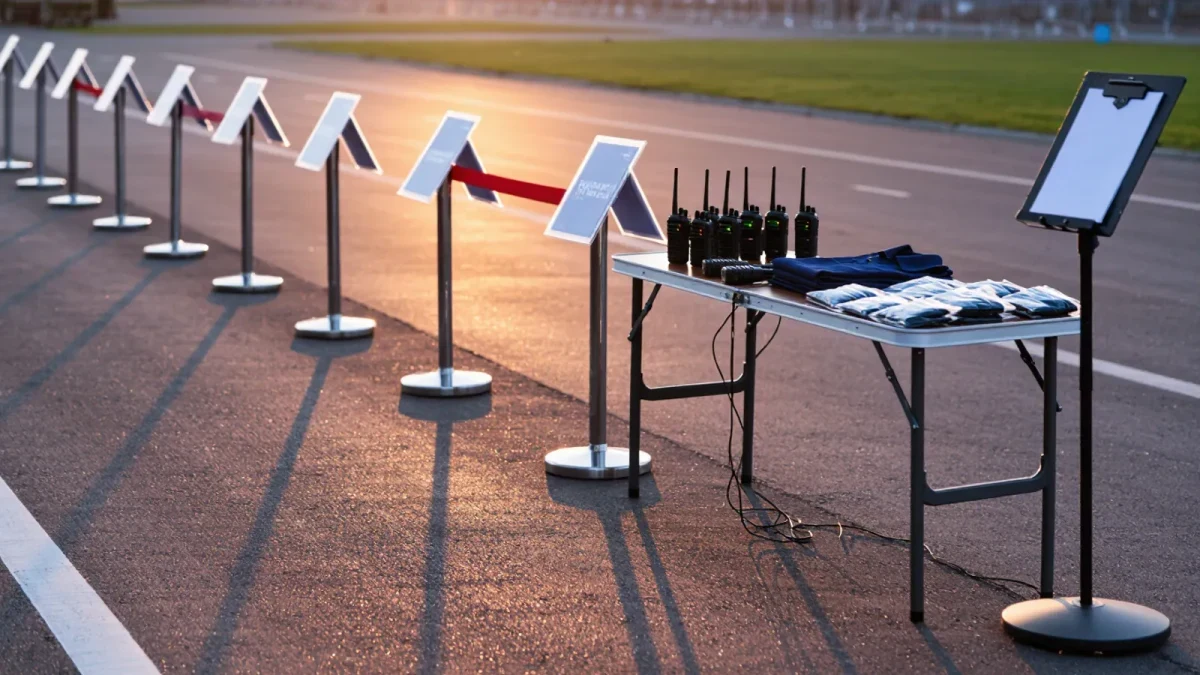
It has become taller and more defensive. Barrier systems separating talent, photographers and fans are now standard, engineered both for safety and for the clean sightlines broadcast partners require. Backdrops have multiplied to serve step-and-repeat obligations across a longer photo line, and several festivals have added sustainability terms to staging contracts — recycled carpet materials, reuse commitments and waste reporting — reflecting the environmental scrutiny host cities now apply to large temporary builds, per municipal permitting requirements described by event-industry sources.
Why does any of this cost so much?
Because it is structural engineering on a demolition schedule. A carpet environment is designed, fabricated, assembled, certified, maintained nightly and removed within days, and every one of those stages carries labor, freight and insurance. Festival production budgets treat the carpet as a capital-scale line item even though the audience only ever sees the fabric. The ninety seconds of procession rests on weeks of drafting and a crew that works the hours no one photographs.
How do designers decide the carpet layout?
Sightlines come first. The production team draws the arrival path so that every photographer position gets an unobstructed angle on the full cast, that broadcast cameras have clean lanes at both ends, and that the sponsor backdrop faces the majority of lenses for the mandated number of frames. The width is set by the group size a premiere must accommodate — a five-person cast walking abreast needs a wider lane than a solo director — and the length is tuned to the broadcast window the festival has promised its partners. Per designers of these environments, the geometry is drafted and revised months before a single platform is delivered.
What does the strike involve?
Speed and salvage. Within hours of the closing ceremony, crews reverse the build in the order that minimizes rehandling: barriers and backdrop first, then seating and grandstand components, then decking, with the carpet rolled or baled last for disposal or recycling. Per staging contractors, a full carpet environment disappears over one or two night shifts, and the site handback deadline written into the venue permit is one of the few dates in festival production that carries financial penalties. The same components are frequently on a truck to the next event before the venue floor is swept.