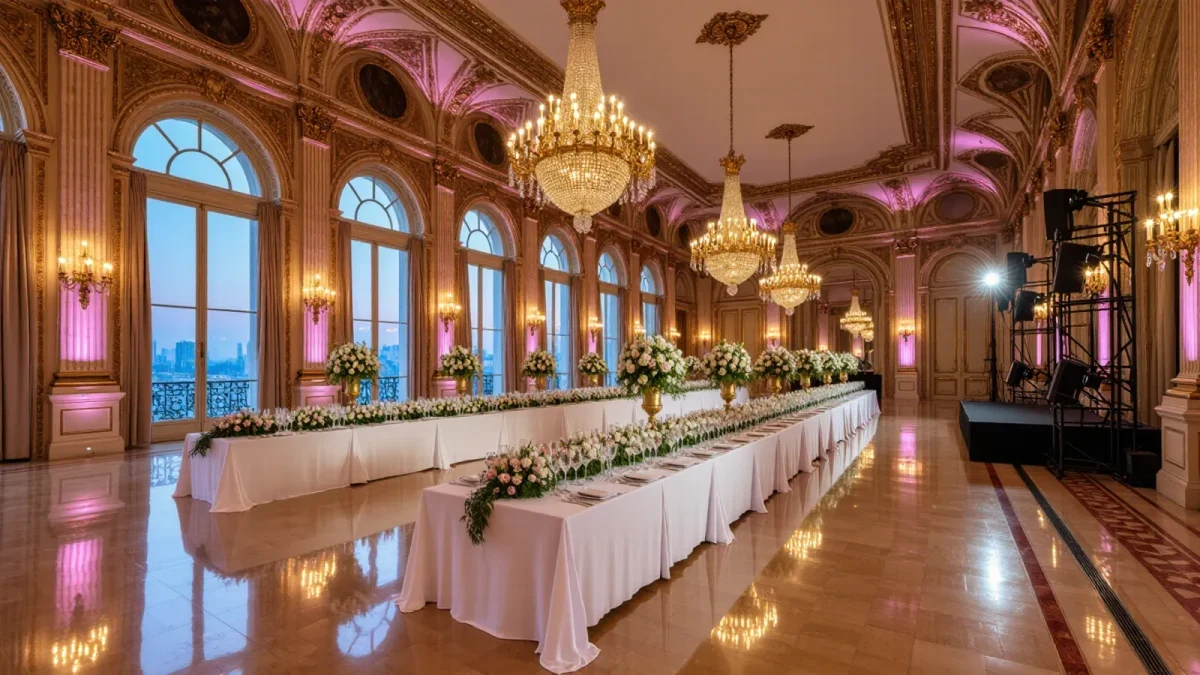
Luxury hotels host premieres and galas because they solve the three hardest logistics problems at once: privacy for talent, bedrooms for guests and photogenic architecture for the cameras. The grand properties along the Croisette in Cannes, the Lido in Venice and the hills above Sunset Boulevard convert their terraces, ballrooms and private beaches into event venues each festival and awards season, per the hotels' published events programs. A property that once sold rooms now sells a stage — and bills for it accordingly.
What does a hotel need to host a premiere-scale event?
Three things beyond ballrooms: controlled access, technical infrastructure and a staff bound to discretion. Red carpet events require street closures or private driveways, backdrop rigging, broadcast power feeds and secure talent routes from suite to step-and-repeat that never cross public space. Per event planners who stage hotel galas, the deciding factor is usually circulation — whether a hotel can move five hundred guests, a film's cast and a press line without any of them meeting by accident.
How is a hotel transformed for a gala?
Room by room, on a tight clock. Production teams take over the ballroom days in advance, installing staging, lighting rigs, floral schemes and seated-dinner floor plans, while the hotel's own kitchen coordinates a banquet service for the same night's regular guests. Per catering directors at grand hotels, a thousand-seat gala dinner is typically built from menus tested months ahead, with service timed to a program run sheet so courses land between speeches and performances rather than during them.
- Ballrooms and terraces are rigged with staging, lighting and backdrop structures days ahead.
- Secure talent routes connect suites to red carpet positions without public crossings.
- Kitchens run banquet service timed to the night's program, not to the clock.
- Festival-season press junkets occupy suites converted into interview studios for a week or more.
Why do festivals cluster around certain hotels?
History and geography. The landmark hotels near the Palais in Cannes and the Casino in Venice became festival institutions because delegations, buyers and talent could walk to premieres and still hold meetings in privacy, a pattern documented in decades of festival reporting by Reuters and the trade press. Dealmaking migrated to hotel terraces and bars for the same reason: a suite functions as a temporary headquarters for a sales agent, with meetings stacked from breakfast past midnight. The hotels, in turn, price those two weeks accordingly and restrict availability to festival business.
What does hosting return to the hotel?
Revenue in the short term and positioning in the long term. Event fees, buyouts of restaurants and terraces, and premium room rates during festival weeks outperform ordinary occupancy, per hospitality industry analyses reported by Bloomberg. The durable asset is imagery: a hotel named in thousands of premiere and gala photographs acquires an entertainment-industry identity that its marketing departments license for years, which is why properties compete for marquee events rather than simply accepting them.
How do benefit galas fit the model?
Better than almost any other event. A charity gala needs exactly what a grand hotel sells — a ballroom, a tested banquet kitchen, guest rooms for visiting patrons and staff trained not to photograph guests. Per nonprofit event announcements, hotel ballrooms and private beaches anchor many of the largest fundraising dinners on the festival circuit, with the venue fee sometimes underwritten by the hotel as an in-kind donation counted in the event's published totals. The hotel gains a civic profile the ledger does not fully capture.
What limits how many events a hotel can take?
Wear and tolerance. Rigging damages ballrooms, buyouts displace regular guests, and residents of resort towns push back when beach and terrace takeovers multiply, frictions covered repeatedly in local reporting during festival seasons. The properties that endure as venues invest their event fees back into operations — soundproofing, service kitchens, security infrastructure — so that the season's disruptions remain profitable rather than cumulative. The best hotel venues, event planners say, are the ones guests never notice have been transformed at all.
For more context, read The Economics of Met Gala Tables and Tickets.
For more context, read luxury festival sponsorship.
For more context, read How the amfAR Cannes Gala Turns Auction Lots Into Millions.