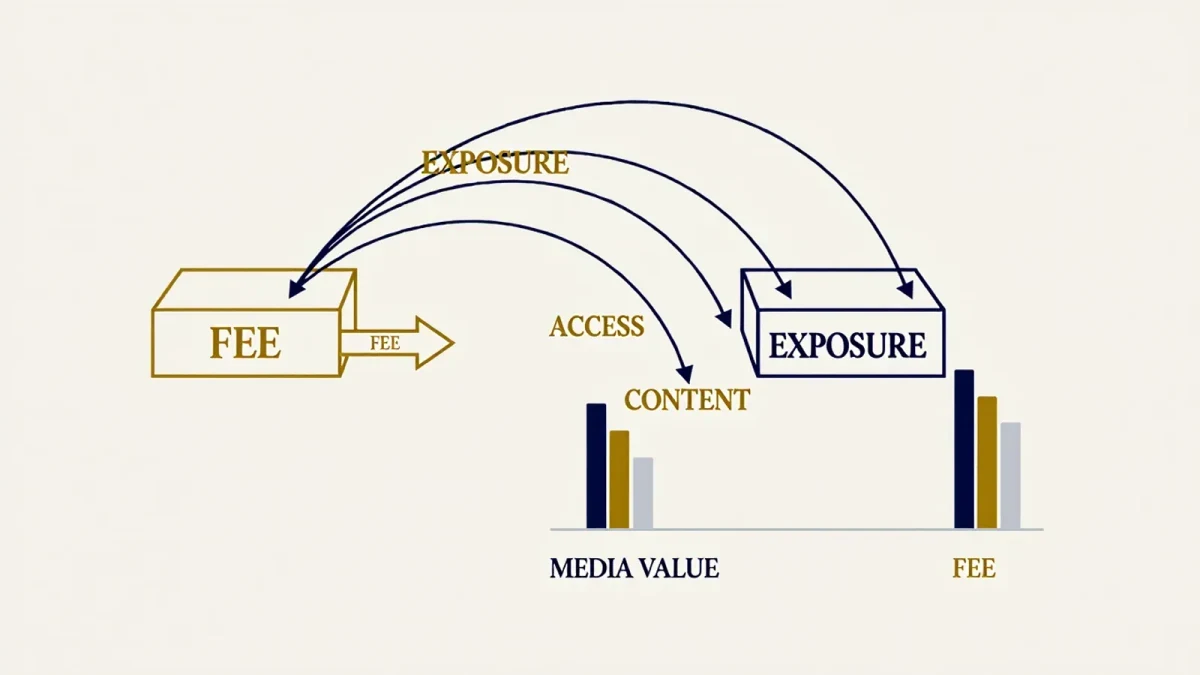
Champagne becomes the official pour of a gala through a contract, not a toast. Houses negotiate packages that specify how many bottles flow, where the brand appears, who pours it and what competitors are kept out of the building, treating each gala like a media buy with a measurable audience. The category's dominance at benefit events is structural: champagne carries celebration associations, a controlled appellation and a price ladder that lets a house sponsor credibly without donating cash it will never recover, per industry commentary on event partnerships reported by Reuters.
What does an official champagne partnership include?
Product, presence and exclusivity. The product line is the simplest: the house commits a defined allocation — from dozens of bottles for a museum benefit to many thousands for a festival season — often at cost or as an in-kind donation valued for the nonprofit's filings. Presence covers glassware branding, bar backs, mention in programs and toast moments timed for cameras. Exclusivity is the real asset: the contract typically bars other sparkling wines from official service, which is why galas pour one champagne and guests drink whatever ambassadors smuggle in.
Why champagne rather than cash sponsorship?
Because in-kind giving is cheaper at the margin and photographs better. A house's cost for a case is well below its retail value, so a donation valued at hundreds of thousands of dollars on a gala's sponsor list costs the maison a fraction of that in production terms. The pour also reaches guests in the act of celebrating, when the brand's associations do the work no advertisement can. Cash sponsors buy a logo; a champagne partner buys a role in the evening's ritual.
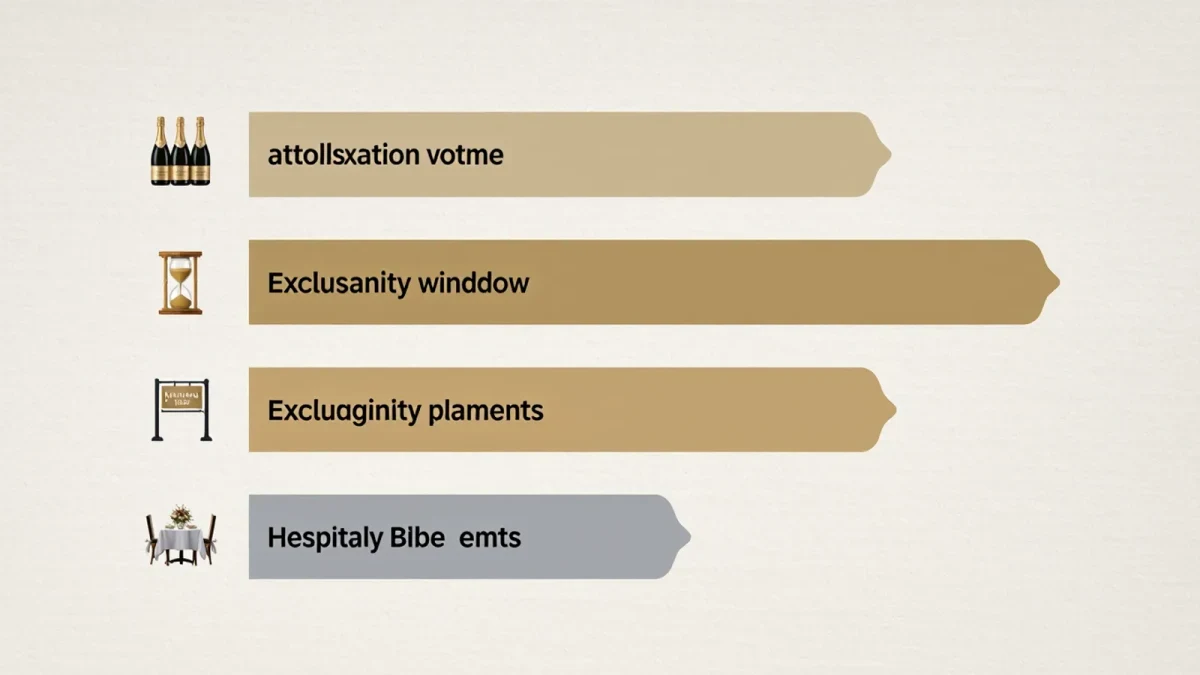
- Defined bottle allocations, donated or supplied at cost as in-kind value.
- Exclusive pouring rights across official bars and seated toasts.
- Branded glassware, bar displays and program acknowledgments.
- Talent-table access for executives and hosted clients.
How do houses choose which galas to back?
Audience fit first, budget discipline second. Houses prioritize events whose guest lists overlap with their target clients — arts institutions, film festivals and design awards with concentrated high-net-worth attendance. Regional strategy matters: a house pushing growth in the American market weights New York and Los Angeles benefits, while a house defending its home market leans on French cultural institutions. Longer multi-year renewals are favored because they let the partnership accumulate recognition, per partnership executives quoted in trade coverage of festival sponsorships.
What does the gala get out of it?
Liquor budget relief and a halo of legitimacy. Benefit galas run on controlled costs, and a donated pour removes one of the largest variable expenses from the event budget while adding a famous name to the sponsor wall that fundraising committees use to recruit table buyers. For festivals, an official champagne signals tier: the pour is part of how the event communicates its level to guests and press without saying so directly, which is precisely the communication the house is paying in product to achieve.
How is ambush marketing handled?
Contractually and logistically. Official partners negotiate category exclusivity that covers official spaces, and event operators police non-sponsor brands attempting visibility on red carpets and in gifting suites, per reporting on sponsorship enforcement at major festivals. The remaining exposure — a celebrity photographed holding a rival bottle at an after-party — is accepted as uncontrollable. Houses respond by signing individuals too: ambassador deals with actors and athletes keep the brand in unofficial frames where event contracts cannot reach.
Does the partnership actually sell champagne?
Not by the glass, and the houses know it. What the pour sells is occasion linkage — the accumulated association between the brand and the nights people remember. Executives describe event partnerships in the same terms as cultural sponsorships: difficult to attribute in a quarter, valuable over a decade, per comments in Reuters and Bloomberg coverage of the luxury drinks sector. The measurable edges are hospitality inventory (tables used to host top clients) and content rights (imagery of the evening licensed into campaigns), both of which are written into the contract precisely because the halo itself refuses to be measured.
Could the model change?
It is being tested from two directions. Champagne supply tightened after successive small harvests in the early 2020s, per Reuters reporting on the region, which pressures the giveaway economics and pushes houses toward fewer, deeper partnerships. Meanwhile non-alcohol occasions — daytime programming, wellness-adjacent festival strands — are growing parts of event calendars where a champagne pour has no role. The houses that dominate gala season are adapting with alcohol-free lines and spritz formats rather than ceding the celebration moment, because the moment, not the liquid, is what the contract was always about.
How far back does the tradition go?
Further than the sponsorship language that now describes it. Champagne's tie to celebration was cemented in the nineteenth century, when railway links, wider glass production and royal patronage turned the region's wine into the default toast of European courts and, later, of cinema galas and premieres. Film festivals institutionalized the pairing in the twentieth century, with official champagne partnerships becoming a fixed line item of festival budgets by the postwar decades. What has changed is the paperwork: relationships once maintained by a house's local representative are now multi-year agreements negotiated with legal teams, renewal clauses and content-rights schedules.
Who signs the deal on each side?
On the house side, a partnerships or events team inside the marketing division, usually with regional authority up to a value threshold and headquarters sign-off for flagship properties. On the event side, the sponsorship or development office of the institution — or the commercial department of a festival — which balances champagne revenue against the interests of other patrons. Negotiations typically begin six to twelve months out, anchored to the previous edition's allocation and attendance figures, per sponsorship practitioners interviewed in trade coverage of event marketing.One compliance detail shapes the paperwork more than guests ever see: because most gala partners are nonprofits, the in-kind value of the donated allocation must be recorded in the institution’s filings, which means the house’s own valuation becomes a semi-public number. Houses therefore price sponsorship allocations carefully — the figure on a museum’s sponsor list is read by competitors as a statement of how seriously the maison takes the property.
"