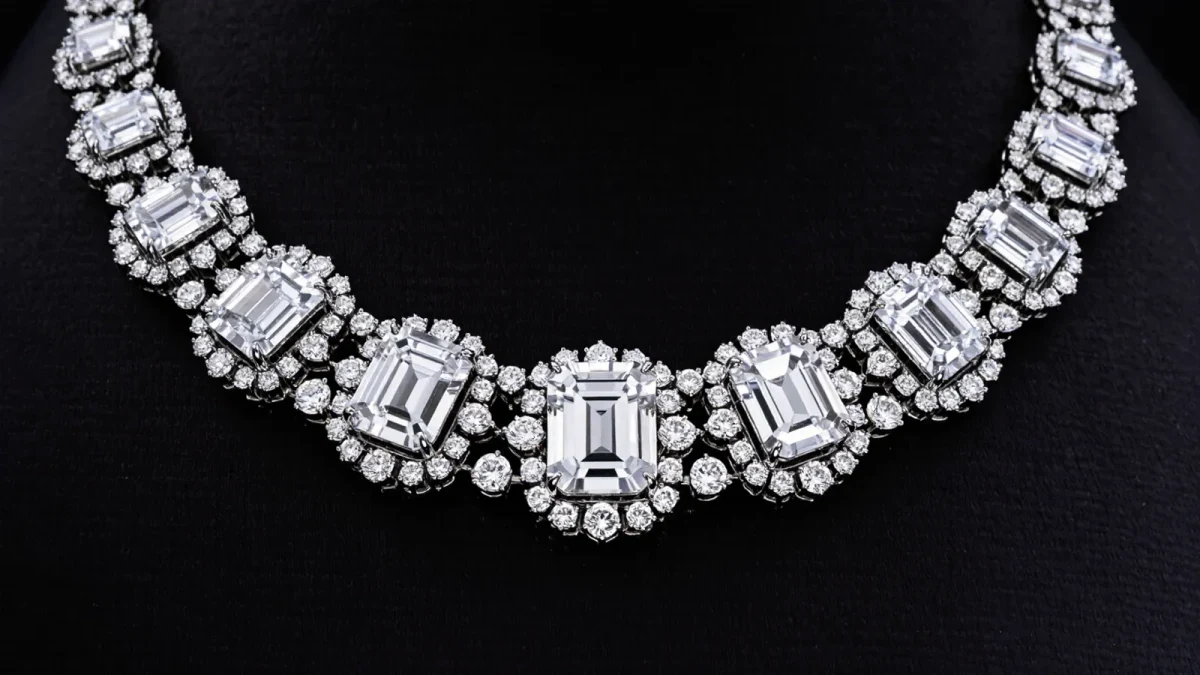
When a star walks a gala carpet in a diamond necklace, the piece is nearly always on loan from a high jewelry house. The arrangement is a short-term contract: the maison lends the jewels, the stylist sources and selects them, an insurer underwrites the risk, and a security professional returns them to a vault by an agreed hour. Multi-million-dollar valuations are quoted by the houses themselves, and the paperwork frequently runs longer than the appearance.
Who arranges the loan?
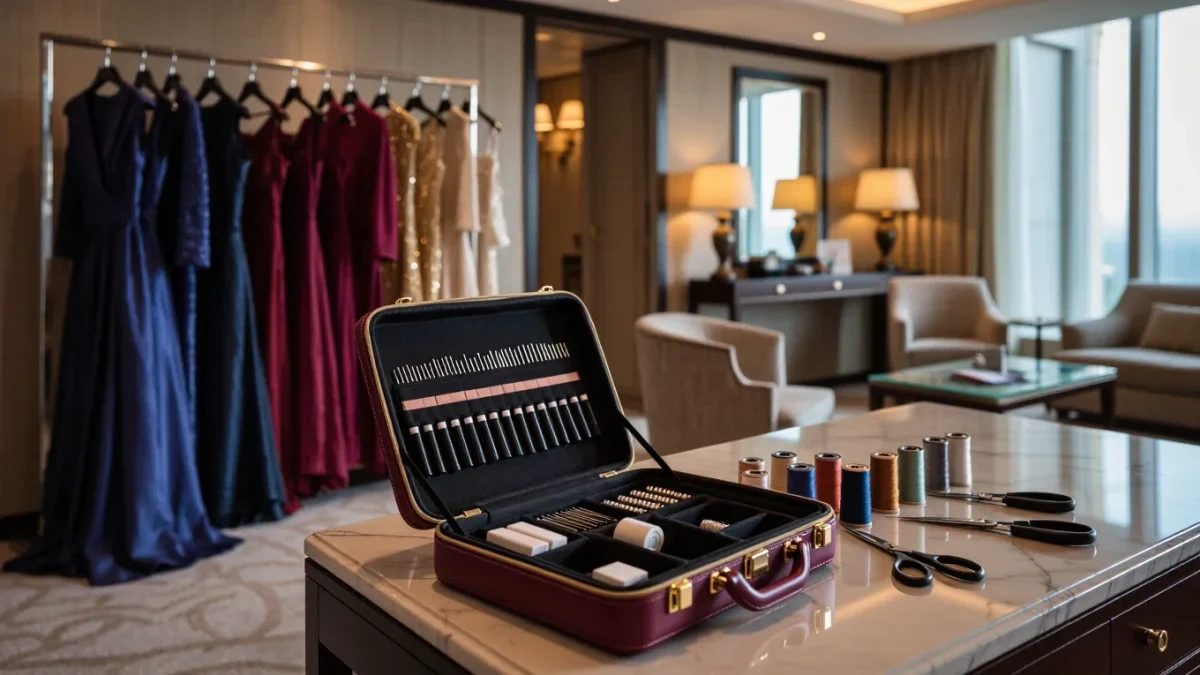
Almost never the celebrity directly. The stylist, working weeks ahead of an event, requests lookbooks from several houses, pulls pieces and matches them to the gown. The publicist confirms the event's photographer profile, because houses prioritize loans by expected media exposure: a museum gala with a global press line outranks a private dinner. Brand relations teams approve each request individually.
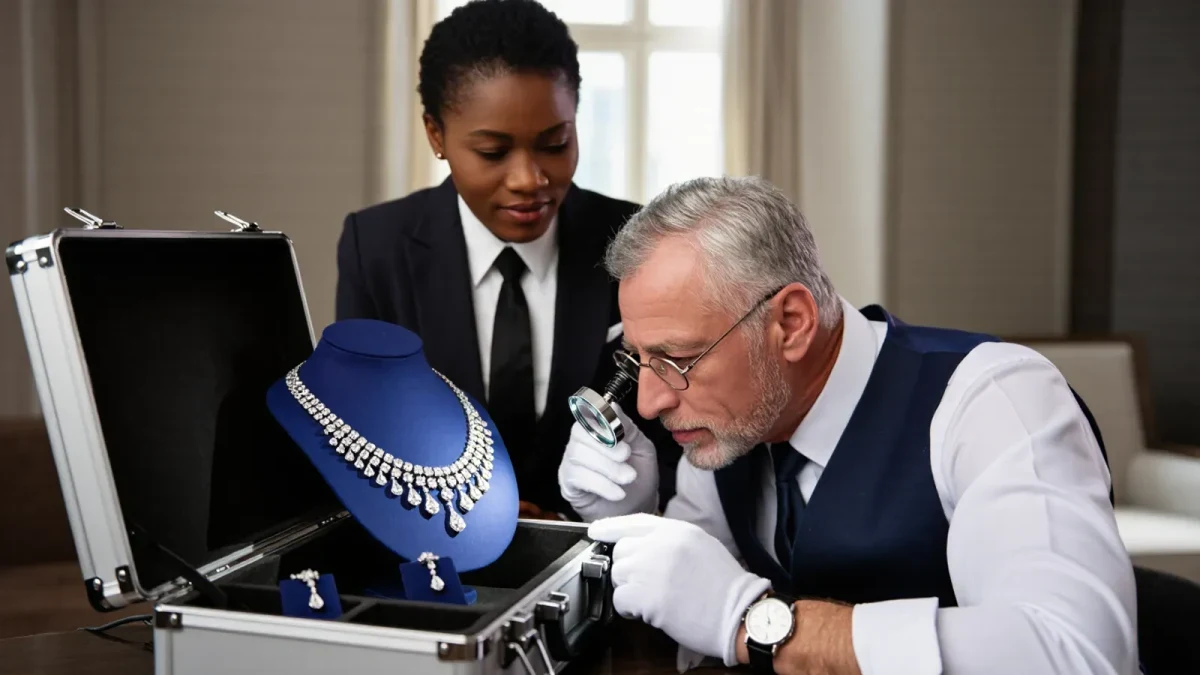
Once a piece is selected, the house issues a loan agreement naming the wearer, the event, the date and the return terms. Some houses fly pieces with a courier; others release them only to a house escort who remains nearby for the evening.
What does the loan agreement contain?
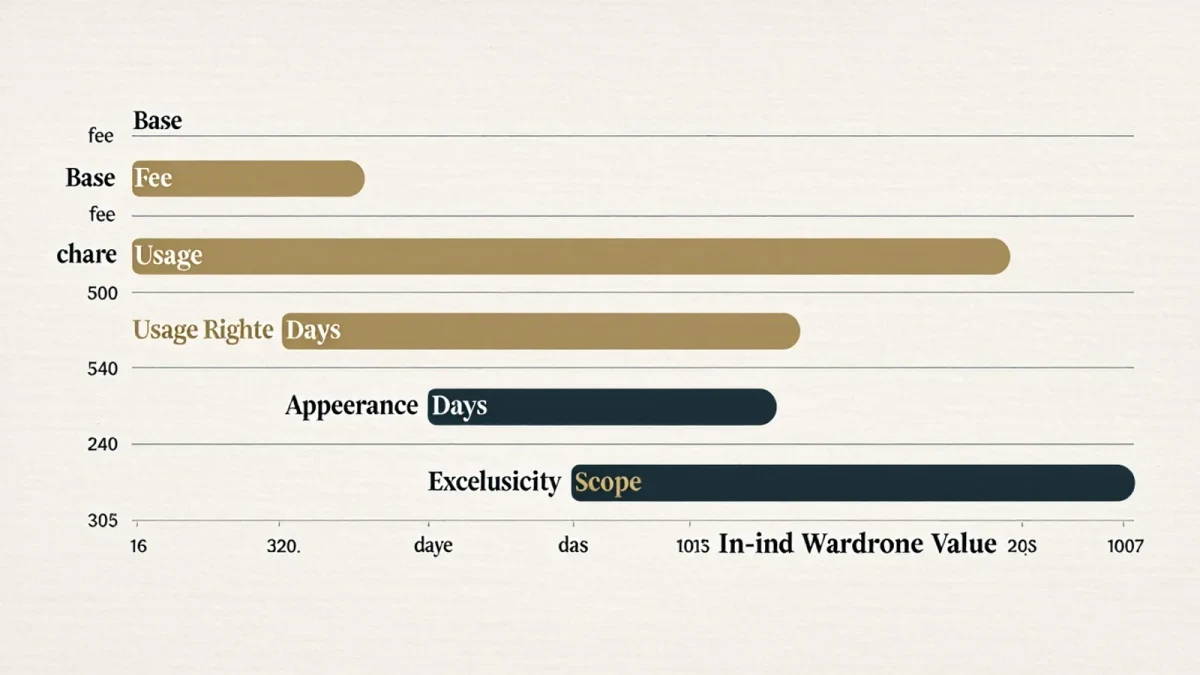
The document is short but specific, and it exists to answer one question: who bears the loss if something goes wrong. Four elements appear in nearly every version.
- Custody chain: named individuals responsible for the piece from delivery to return.
- Insurance: a jewelers block policy or rider covering the wearer for the loan period.
- Usage window: the exact hours the piece may be worn, and the events covered.
- Credit obligations: how the house is credited in press and on social platforms.
How is the jewelry insured?
Insurance sits with specialist fine-art and jewelry underwriters. The loan period is covered either under the maison's own policy or under a temporary rider arranged by the celebrity's business manager, and the cost is a negotiated expense of the appearance. Valuations are confidential in most cases, which is why reported figures for red carpet pieces come from the houses, not from insurers.
Wearers are usually protected against loss that is not gross negligence. That distinction drives behavior on the carpet: pieces are put on shortly before the line, taken off immediately after photographs, and transported in cases rather than worn in cars between venues.
Why do houses lend pieces at all?
The economics favor the lender. A single strong carpet photograph circulates globally within a day, attached to the house name in every caption and best-dressed roundup. Industry observers describe the arrangement as the most efficient media placement in luxury: production cost is a courier and an escort, and the return asset is intact inventory that can be lent again or sold.
Loans also build relationships that mature into ambassadorships. A house that dresses a rising actor for three seasons has a claim on the conversation when that actor's team negotiates a contract. The carpet is the audition.
What happens if a piece is damaged or lost?
The claim process follows the custody chain. If damage occurs while the piece is with the named wearer, the insurance rider responds and the house's workshops handle restoration. If custody was transferred informally, an assistant carrying a bracelet without documentation, liability can shift to the individual. Contracts are written to prevent ambiguity, which is why possession changes are logged in writing even mid-event.
The carpet is the audition: loans today become ambassadorships tomorrow.
Do celebrities ever keep the pieces?
Occasionally a loan converts into a purchase or a gift, usually at a milestone: a house may mark an ambassadorship or an award by closing the loan as a gift. But the default is return. High jewelry reference pieces are one-of-a-kind assets that live on balance sheets, tour boutiques and anchor exhibitions; they leave the vault to work, then come home.
How has lending changed?
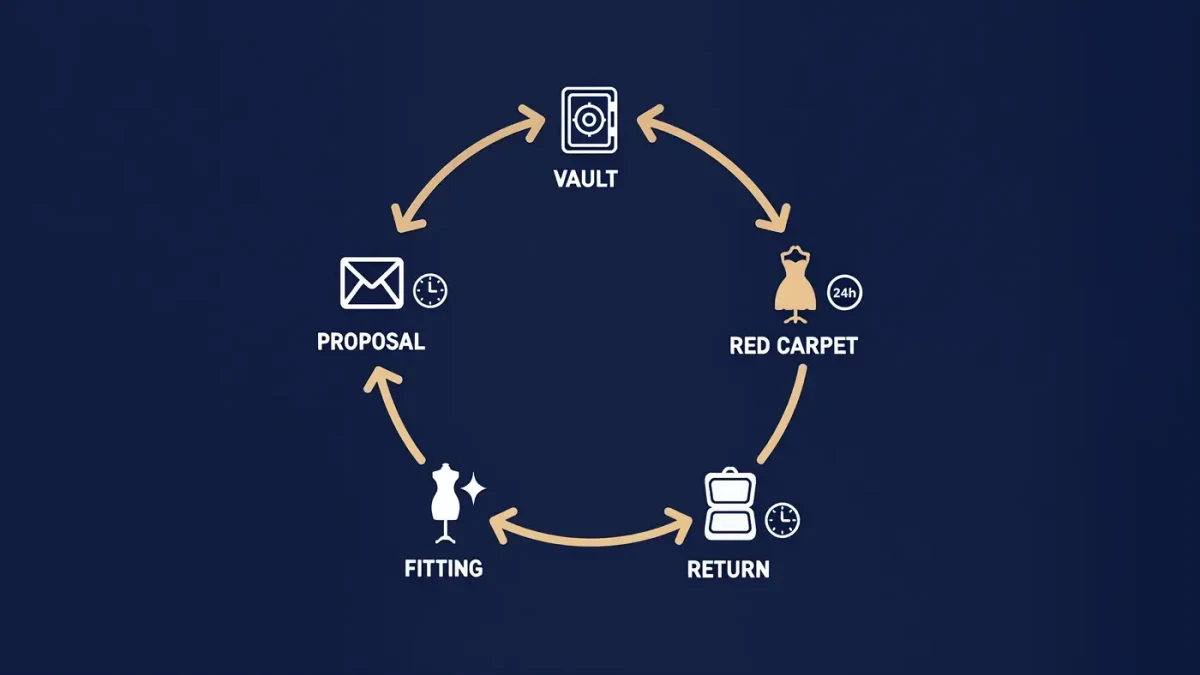
Teams now negotiate social media usage as carefully as carpet credit, since a single portrait on a personal account can outperform the press line. Houses have also tightened windows, returning pieces the same night rather than the next morning, and expanded rosters of eligible wearers beyond film actors to musicians and athletes. The mechanics remain what they have always been: selection, contract, insurance, security, return, credit.
How far in advance are loans planned?
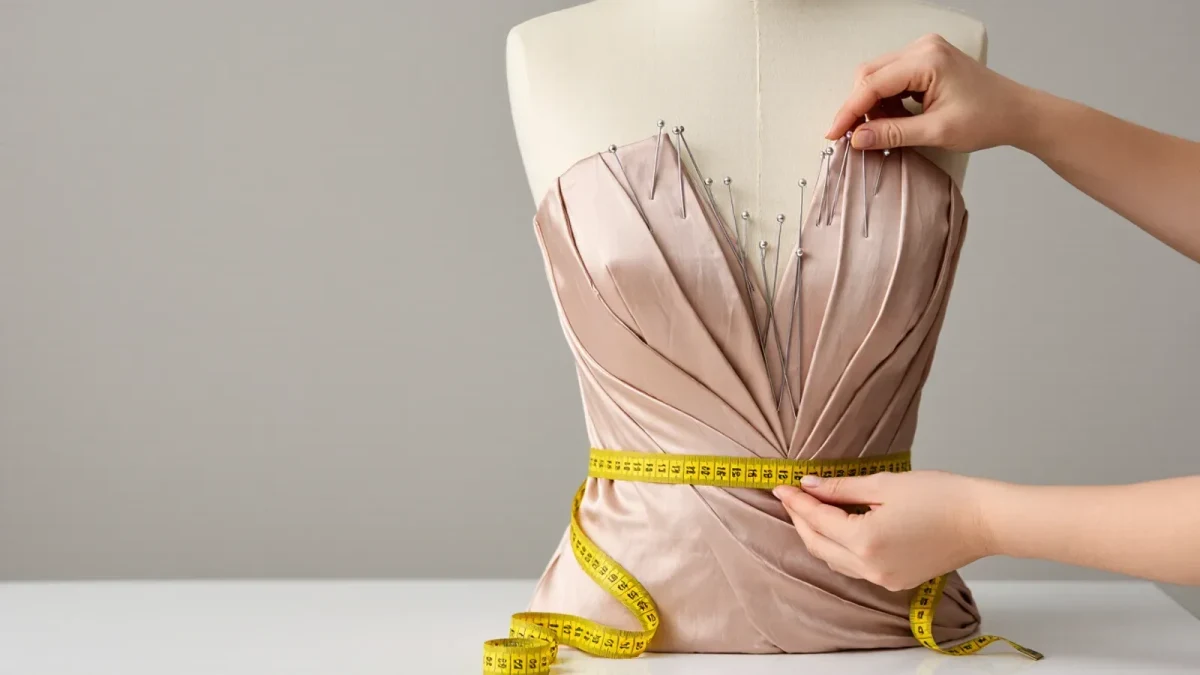
For major galas, the cycle starts six to eight weeks out. Stylists receive lookbooks and archive availability, houses check touring exhibition schedules that may have pieces committed, and provisional holds are placed on multiple options per client. Confirmations harden two weeks before the event, once the gown silhouette is final, because the neckline dictates the necklace and an updo dictates the earrings.
The same calendar logic applies in reverse. A house planning a high jewelry exhibition in another city will decline a loan rather than break the exhibition schedule, which is why the same star can wear a maison's pieces at one event and a competitor's at the next without any change in loyalty, only in logistics.
What security surrounds the evening?
Security is quiet and layered. Pieces travel in unmarked cases with a courier, are stored overnight in hotel safes or a brinks hold, and on the carpet an escort remains within sight of the wearer. After photographs, the jewelry comes off in a designated room before dinner or after-party, not at home, and the chain of custody is signed at each transfer. None of this appears in the pictures; all of it is in the agreement.