Catering a thousand-guest gala is a logistics exercise measured in seconds. The menu is fixed months ahead, dietary requirements are collected with RSVPs and mapped seat by seat, and on the night the kitchen must plate a full course across the entire ballroom within roughly 90 seconds to two minutes so hot food arrives hot everywhere — a window caterers treat as the defining constraint of large-format service. Everything guests experience as an evening of courses is, in the kitchen, a schedule with a handful of immovable deadlines.
How far ahead is a gala menu planned?
Typically six to nine months. Caterers and event teams taste and cost menus in the spring for autumn galas, balancing the venue's kitchen capacity, the theme and the budget per plate. Tastings adjust seasoning and portioning; contracts lock counts, service style and overtime terms. Menu cards and printed programs reference dishes, so final language freezes weeks before the event, while actual guest counts keep moving until 72 hours out — caterers plan against a guaranteed minimum and cook against a final number.
What does the kitchen build look like?
Most gala venues do not have kitchens sized for a thousand covers, so caterers build temporary ones: tented prep tents, brought-in ranges, holding cabinets and refrigerated trucks docked at service doors. The layout separates cooking, plating and tray-passing lanes, and servers stage in corridors with numbered trays matched to table numbers. Plating for a banquet of this scale runs assembly lines — proteins rested and held at temperature, components finished à la minute, sauces mounted at the pass — because a thousand plates cannot be cooked to order in any home-kitchen sense.
How is the timing controlled?
Backward from dessert. The program's speeches, auction and performances set course-drop times, and the kitchen works to a minute-by-minute cue sheet; when an auctioneer runs long, the executive chef decides whether a course holds or plates early. Synchronized service — every guest at a table served at once, every table in the room within the window — requires roughly one server per ten to twenty guests depending on style, plus captains per section. Hot-line failures at this scale are not recoverable by effort, only by planning, which is why caterers rehearse complex galas the same way productions rehearse.
How do dietary requirements shape the menu?
They now shape it at the design stage. Caterers report collecting RSVP dietary data that includes vegetarian, vegan, gluten-free, nut allergies, shellfish allergies, halal and kosher requests — commonly amounting to a meaningful minority of covers at large galas, with allergy cases individually verified by the banquet captain. The standard architecture is a plant-forward default that converts cleanly to vegan and gluten-free, plus a separate allergen matrix in the kitchen mapping every component. Strict kosher service typically means sealed meals from a certified kitchen, plated with oversight, since a ballroom kitchen cannot certify itself.
What does service style do to cost?
Plated multi-course service is the most expensive per cover in labor and equipment; food stations and family-style service trade formality for throughput and volume. French classical service — synchronized plating, presented tableside — remains the gala standard because it matches the program's structure: guests eat between speeches rather than grazing through them. Late-night service, a second food drop after the auction and dancing, has become common as organizers extend evenings, effectively catering a second event within the same contract.
What happens to surplus food?
Progressively, redistribution. Many gala organizers now arrange post-event donation of untouched prepared food through local food-recovery partners, within food-safety guidelines on holding temperatures, and sustainability clauses covering donation, composting and decor reuse have become standard in catering contracts. Liability concerns are settled law in the US — federal protections for good-faith food donors exist — so the remaining constraints are logistical: recovery partners must collect hot-line surplus within safe windows, which means they are booked before the gala, not after.
Why does the food at big galas so often seem safe?
Because the menu is engineered for a thousand simultaneous covers, not for a critic. Sauces that hold, proteins that tolerate resting, components that survive a two-minute window across a ballroom — the constraints reward dishes built for timing. The best large-format caterers treat the menu as choreography, and the guests who notice anything usually notice that the plates landed together, which was the entire point.
How many staff does a gala of this size require?
Commonly several hundred. A seated dinner for a thousand typically deploys one server per one to two tables for synchronized service, plus captains per section, a plating line of cooks, stewards turning dirty service through dish stations, and coordinators matching tray traffic to table numbers — with kitchen and front-of-house staff roughly comparable in size. Staffing is scheduled in waves: set crews days ahead, service staff from mid-afternoon, and a breakdown crew that works into the morning. Overtime terms are negotiated in the contract precisely because program delays are routine.
How is the ballroom itself converted for dinner?
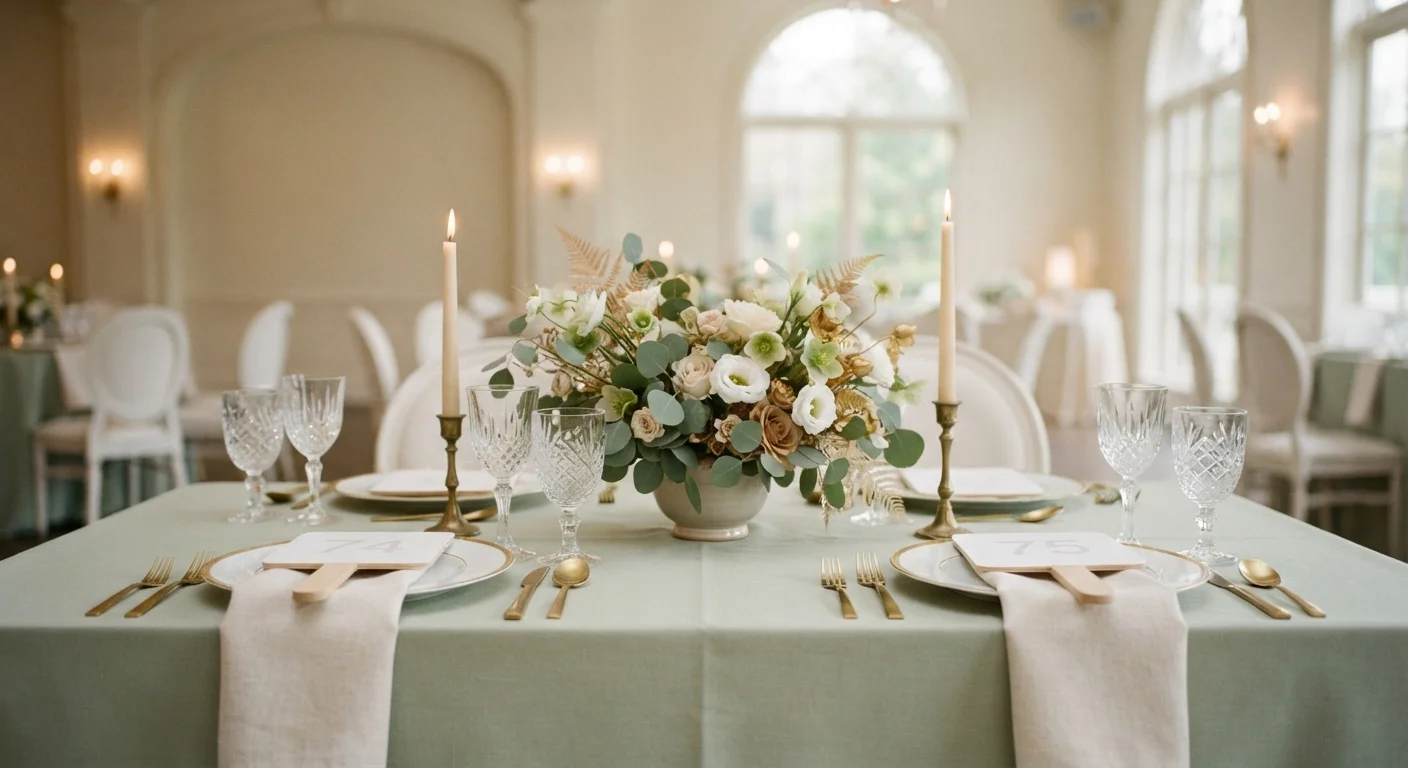
Over a 24-to-72 hour load-in. Floors are laid or protected, rigging and lighting flown, staging and sound built, and then the tables — a hundred rounds with linen, china, glassware and flatware per the service design, each setting placed to a measured diagram. Chair counts, place cards and seating charts are checked against the guest database that also drives the dietary map. The conversion is why gala venues hold rooms for multiple days: a thousand-cover dinner is effectively a temporary restaurant built, operated and demolished inside a week.
How do caterers price a gala dinner?
Per cover, with the plate cost a minority of the bill. Quotes break into food, labor, rentals and service charges — and the per-guest price rises steeply with exclusivity of product, course count and service style. Clients also pay for what they do not see: tastings, menu development, contingency covers and overtime. Industry guidance to event buyers is consistent — compare caterers on total cost per cover including service and rentals, not the headline menu price, and confirm what the guaranteed minimum covers if attendance drops.
What food-safety constraints shape the menu?
Holding temperatures and cross-contact, enforced by health-code requirements for temporary food service. Hot components must hold above safe temperatures across a long plating window, which is why menus favor robust proteins and sauces; allergen cross-contact controls require separate prep and dedicated utensils, validated through the allergen matrix. Municipal health departments inspect temporary kitchens at large events, and caterers stage their documentation — temperature logs, staff certifications — accordingly. The safety regime, like the timing, quietly writes the menu.