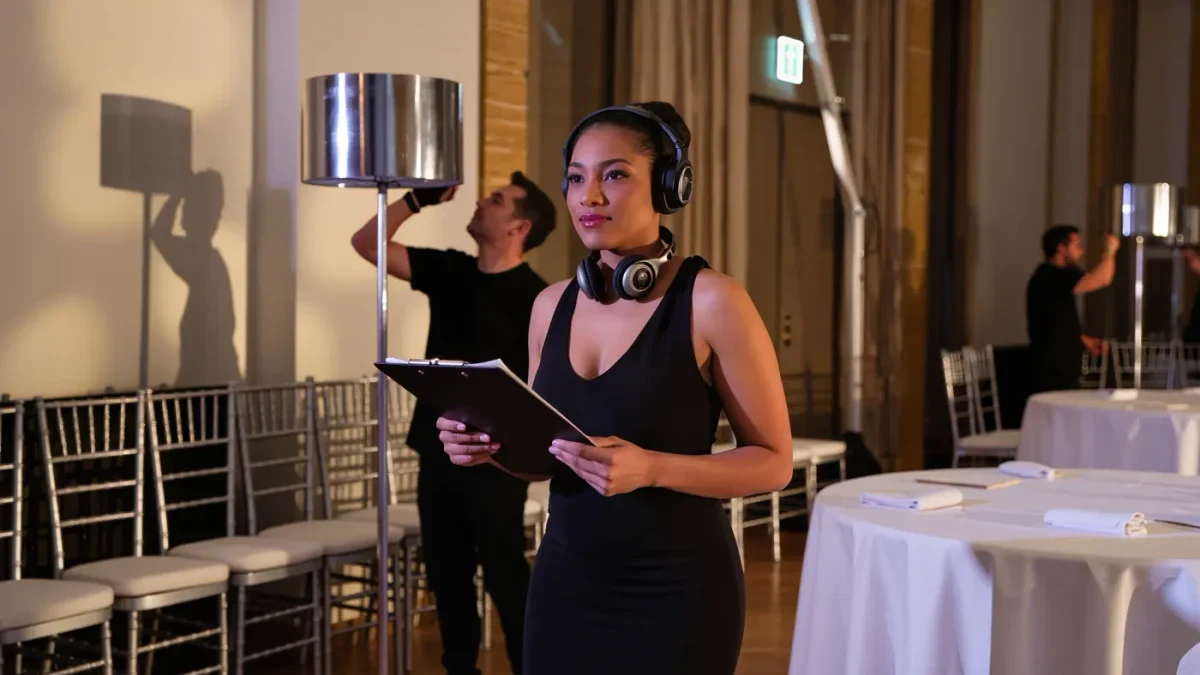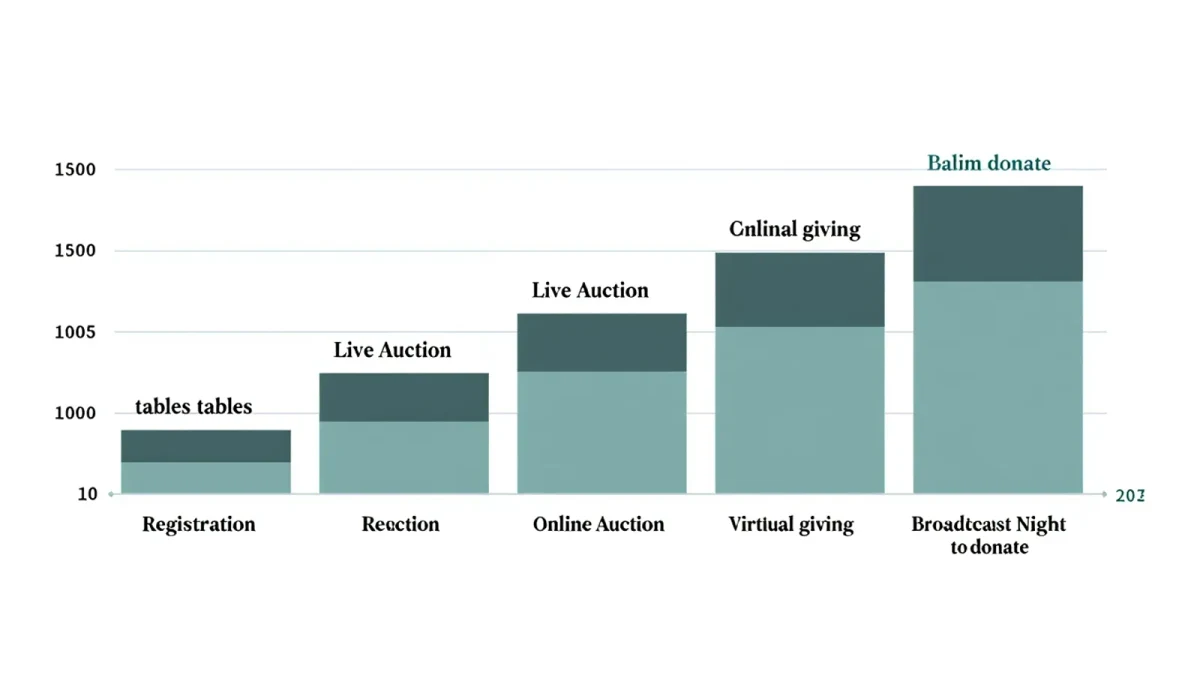
The forced experiment of 2020 became a permanent revenue layer. When in-person galas shut down, nonprofits moved auctions online, streamed programs from empty venues and collected gifts by text — and when ballrooms reopened, most organizations kept the digital components. The result is the hybrid benefit: a physical room of a few hundred donors plus a livestream audience, an online auction open for days before the event and giving pages that accept donations from anywhere. Organizers that report hybrid results describe the same pattern — the room still supplies the majority of revenue, but the virtual layer adds donors who would never have bought a table.
What does the virtual layer of a gala actually contain?
Four standard parts. A livestream of the program — speeches, tribute films, the live auction — hosted on the organization's site or a streaming platform. An online auction, usually run on dedicated fundraising platforms, open for a week or more before the event closes it during dinner. A text-to-donate or QR giving mechanism promoted on screen throughout the stream. And virtual-only ticket tiers, from free registration to curated at-home experiences with delivered dinner boxes. Each component has a separate cost and conversion profile, and organizations assemble them à la carte.
How does remote bidding change the auction?
It widens the bidder pool beyond capacity. Mobile platforms let remote bidders compete in real time against the ballroom during the live auction, and online silent auctions run for days, which organizers say lifts both lot counts and final prices. The mechanics are the platforms' core product: outbid notifications, countdown extensions that add time when bids land in the final minutes, and automatic checkout from cards on file. The trade-off is fee structure — platforms charge setup and percentage fees — and lot design, since remote bidders favor shippable items and bookable experiences over venue-specific prizes.
What do livestreams contribute financially?
Directly, modestly; indirectly, structurally. On-stream giving via text and QR codes produces a real but smaller revenue line than the room — typical virtual donors give lower average amounts than table buyers. The structural value is reach and data: every registrant becomes a contact with giving history, and organizations report that virtual attendees convert into repeat donors, event attendees and eventually committee members at meaningful rates. For national causes, the stream also lets corporate sponsors activate employee audiences, a benefit sold into sponsorship packages.
How are hybrid totals reported?
As combined figures with a virtual breakdown when organizations are disciplined. Post-event announcements increasingly state the room total, the online-auction total and the virtual giving total separately, because the components have different costs and different donor bases. The same totals then surface in Form 990 filings as special-event revenue, where online auction proceeds and virtual gifts are indistinguishable from ballroom money — the stream donors, however, appear in the donor file that drives every future solicitation, which is where their value compounds.
What does the virtual layer cost?
Less than a ballroom but not nothing. Streaming production — cameras, mixing, captioning, a hosting platform — runs from a few thousand dollars for a minimal broadcast to six figures for broadcast-grade hybrid shows. Auction and giving platforms charge setup plus roughly single-digit percentages of amounts raised, per published platform pricing. Against that, virtual components remove venue constraints on attendance and let organizations justify sponsor packages that include broadcast inventory, opening revenue lines the physical event never had.
Will hybrid galas replace the in-person event?
No organization that reports its numbers says so. The room remains the revenue engine — table sales, the live auction and the paddle raise depend on physical presence and social pressure. What hybrid models did was fix the gala's capacity problem: the evening now has an audience beyond its walls, a donor file beyond its room and an auction beyond its guest list, all of which survive precisely because the ballroom came back.
What does a virtual ticket include?
Whatever the organization packages, in a stable ladder. Free registration buys the stream link and a giving prompt. Paid tiers — commonly tens to hundreds of dollars — add curated elements: a delivered dinner or cocktail kit, a program book by mail, access to an online pre-reception or post-show Q&A. The highest tiers approach the in-room experience without the room. The economics are attractive because marginal costs are low, but organizations caution against overbuilding; virtual packages that require fulfillment logistics eat the margin that justifies them.
How do organizations promote the virtual layer?
On the same calendar as the gala, with the stream as the product. Email sequences to the full database in the weeks before, social clips from tribute films and auction previews, and sponsor channels pushing the broadcast to employee audiences. The stream's own runtime is programmed like television: a clear start, compact speeches, the live auction carried with remote bidding promoted on screen, and on-screen giving totals that show momentum. Organizations that treat the stream as a camera pointed at a dinner report weak virtual results; those that program for the remote audience report the opposite.
What did all-virtual galas teach fundraisers?
Three durable lessons from the 2020-2021 cycle, per organizations' subsequent reporting. Online auctions can outperform their ballroom equivalents when open for days rather than hours. Celebrity participation is easier to secure for a recorded segment than a physical appearance, which raised production values permanently. And virtual attendees are a distinct audience — geographically dispersed, younger on average — rather than cannibalized ticket buyers, which is why the retention of hybrid components is a data decision, not a pandemic habit. The events also exposed the ceiling: without a room, paddle raises and table sales do not translate, and totals sagged accordingly.
How do sponsors value the virtual layer?
As reach they can measure. A ballroom holds several hundred impressions; a stream, depending on the organization's audience, serves thousands, with registration data, view durations and click-throughs attached. Sponsorship decks now price broadcast inventory — logo placement on the stream, named segments, product integration in virtual packages — alongside tables, and corporate marketing teams can justify the spend against media budgets rather than philanthropy caps. For national brands, the hybrid gala has effectively become a content buy with a charity halo.