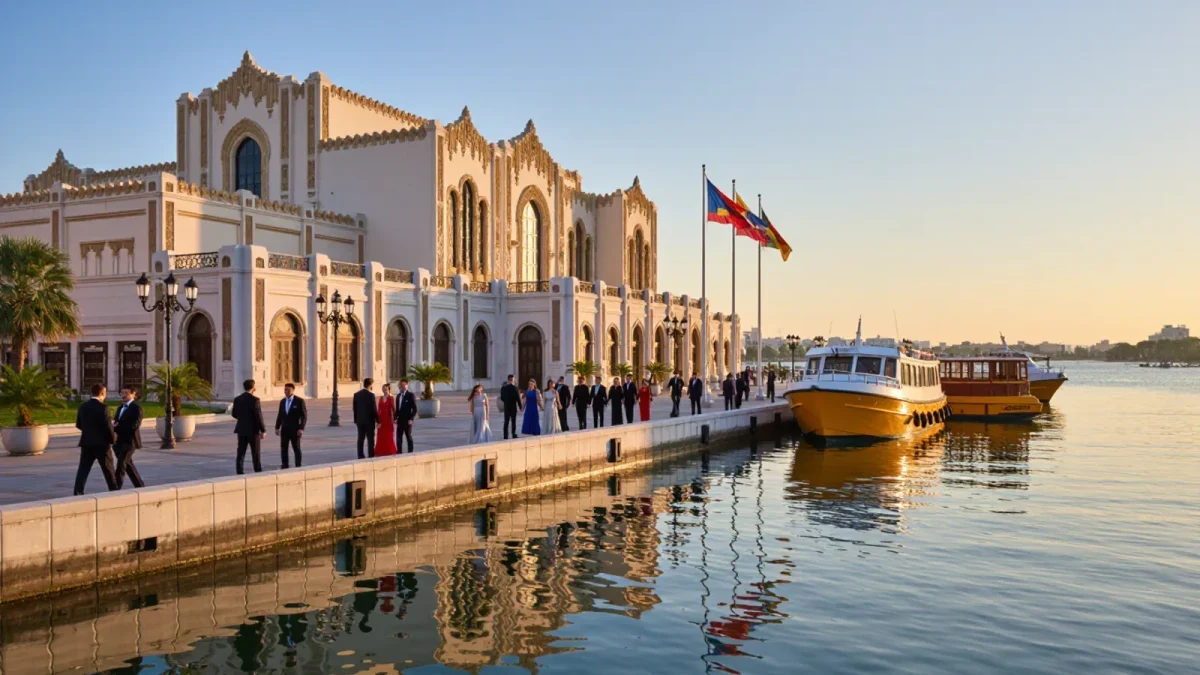
The Venice Film Festival runs on the Lido, a slender barrier island in the Venetian lagoon, because it has since 1932, when the city's Biennale arts institution added film to its program. Organized today by La Biennale di Venezia under the direction of a festival appointee, the event converts a quiet residential strip of roughly 20,000 residents into the center of world cinema for about eleven days each late summer. Per La Biennale's published materials, everything — premieres, market screenings, juries, guest services — happens within walking distance along the Lungomare Marconi waterfront, with Venice proper and the mainland airport connected by boat.
Which venues does the festival actually use?
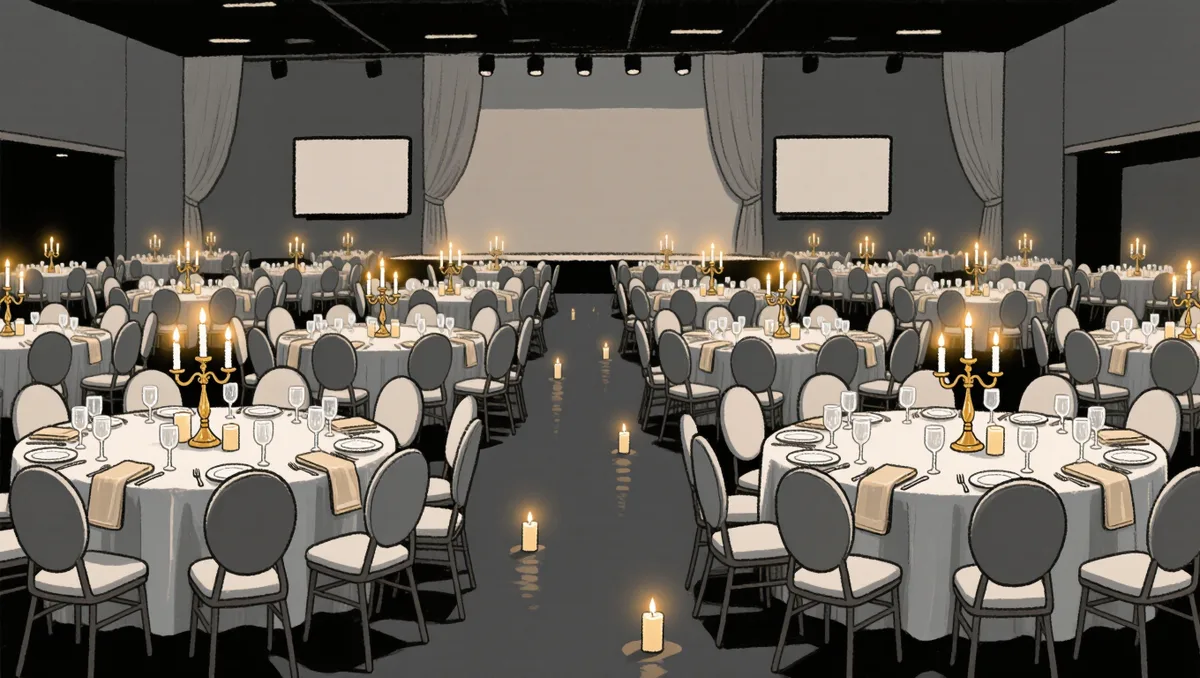
A cluster of state-owned and leased buildings within roughly one kilometer. The nucleus is the Palazzo del Cinema on the seafront, whose Sala Grande hosts the red carpet premieres and, per La Biennale's venue pages, seats just over a thousand guests. Alongside it sit the Sala Darsena, a second large auditorium added in the 2010s expansion, and the PalaBiennale, a converted sports arena used for high-demand public screenings after the festival relocated it onto the Lido in 2018. Smaller rooms — the Sala Volpi, the Sala Perla, the Casinò spaces — host press and industry screenings and side-section programs.
The geography imposes discipline that land festivals never face. Guests move on foot between venues, production trucks cross the lagoon by ferry, and the supply chain for carpet, seating and catering arrives by barge. Festival operations staff schedule deliveries around vaporetto timetables, because the island's roads are few and its bridges are low.
How does anyone get onto the island with a film?
Through selection first, accreditation second. The festival's programming team, led by its artistic director, invites films into the official competition and the parallel sections — Orizzonti for formally adventurous work, and the Biennale College sections for developing projects, per La Biennale's section descriptions. Once a film is invited, its cast, director, sales agents and publicists apply for badges under quotas tied to each film's slot. A competition premiere receives a larger guest allowance than a side-section screening, and studios top up with their own industry accreditations.
Why do badges and quotas matter so much here?
Because seats are physically finite. The Sala Grande premiere allocation must satisfy the film's delegation, the festival's patrons, accredited press and paying public, in that order of priority. La Biennale's access rules divide badge holders into color-coded categories, and each category has its own queue line and seating window. When demand exceeds capacity — the routine case for star-driven premieres — the festival runs overflow screenings in the PalaBiennale and simultaneous press screenings on the Casinò side of the campus.
- The Lido hosts all festival venues within walking distance along the seafront.
- The Palazzo del Cinema's Sala Grande is the premieres room, with roughly a thousand seats.
- Guest allocations per film are set by section and slot type.
- Badge categories, per festival access rules, govern queues, seating and venue entry.
How does the market function without a market building?
Venice long resisted a formal film market, and its industry side still runs lighter than Berlin's EFM or Cannes' Marché. Production and sales offices occupy hotels and temporary structures for the duration, and the festival's industry office schedules networking events around the screening program. Per trade coverage of recent editions, buyers treat Venice as a launch platform for autumn award-season titles rather than a volume market, which keeps the industry footprint compact and hotel-dependent — a deliberate positioning the festival has confirmed in its own strategic statements.
What does the lagoon itself demand operationally?
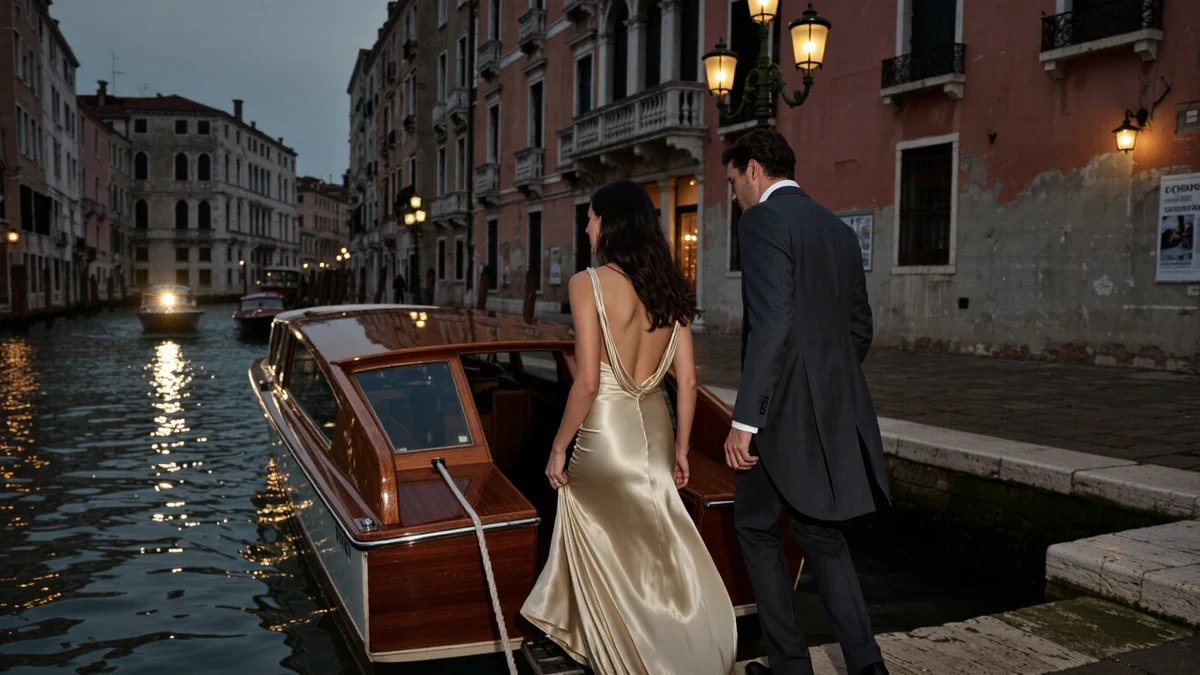
Redundancy. Weather in late August can swing from heat waves to storms, and acqua alta flooding, while rarer on the Lido than in central Venice, shapes contingency planning for open areas like the red carpet. Transport is chartered: water taxis shuttle talent from mainland and airport hotels, police and coast guard boats patrol the waterfront, and the festival contracts dedicated vaporetto capacity for badge holders. Per municipal notices issued during festival periods, city agencies coordinate extra public transport lines on peak premiere nights.
Who pays for all of it?
A layered structure typical of European festivals. La Biennale receives institutional funding from Italy's culture ministry and the Veneto region, per its annual reports; the festival layers on ticket sales, accreditation fees from industry attendees, and partnerships with fashion, beauty and automotive brands that underwrite galas and lounges. The Lido municipality and Venice city hall contribute policing, transit and permitting. This mix insulates the festival from any single revenue source but also ties its scale to public cultural budgets, a point its leadership has made in budget presentations to the Biennale board.
What happens to the island when the festival ends?
It reverts within days. The temporary structures — fan zones, sponsor pavilions, press tents — are dismantled on a schedule written into permits, the PalaBiennale returns to sport, and the Palazzo del Cinema resumes its off-season role hosting Biennale departments and occasional events. The lasting effects are quieter: hotel occupancy data for the Lido shows a pronounced August spike the festival period reliably produces, and the island's hotels reprice their calendars around it. The machinery dissolves; the island, and the institution that has run the show since 1932, remain.
How does the red carpet hour work?
Each evening premiere begins with a choreographed arrival window. Talent is staged at a holding point off the carpet, released in pairs on a schedule set by the festival press office, and photographed ascending the steps of the Palazzo del Cinema before the Sala Grande doors close. Per accreditation guidance issued to media, photographers occupy ranked positions assigned in advance, and outlet seniority determines placement — a system repeated at every major festival but compressed here by the narrowness of the seafront site.
The carpet itself is a production asset. It is laid, cleaned and repaired across the festival by a contracted crew, replaced when rain or foot traffic degrades it, and removed within hours of the closing ceremony. Nothing about the arrival choreography is improvised; the schedule is distributed to delegations each morning.
Where do the juries and press stay?
Hotels, overwhelmingly. The Lido stock of mid- and large-scale hotels absorbs jury members, competition talent and studio delegations, while much of the accredited press commutes by vaporetto from Venice proper or the mainland Mestre district, where rates are lower. Lido hotel pricing during the eleven days is among the steepest on the Italian coast, and rooms for the opening week are contracted by distributors and sales agencies months in advance.