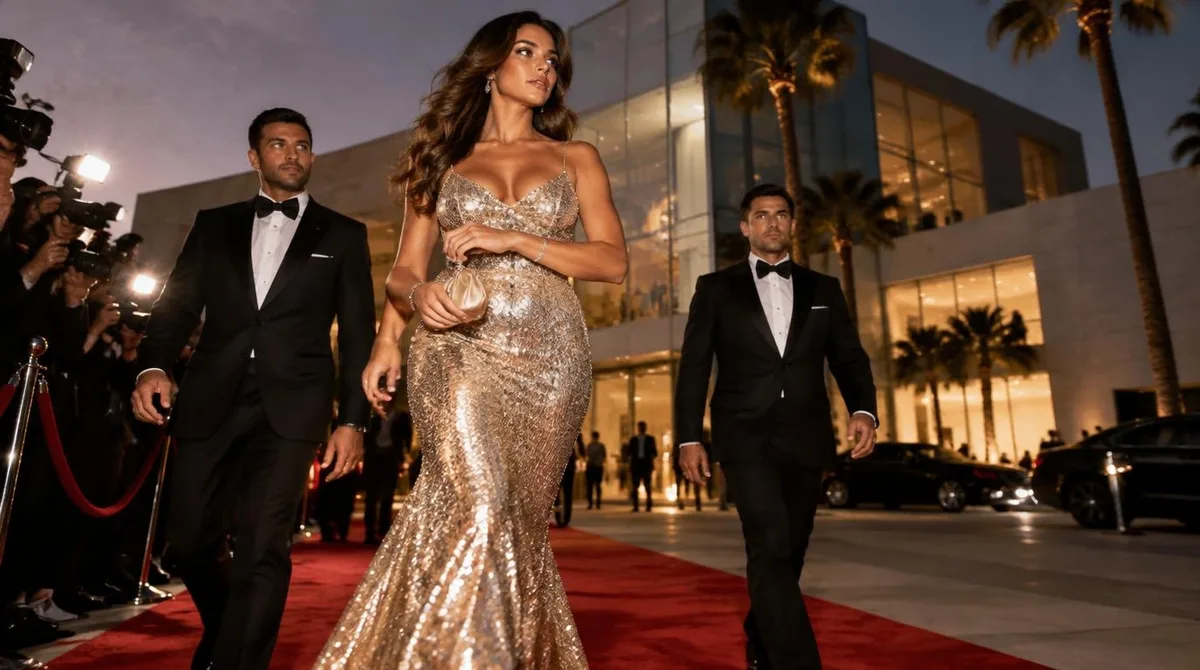
The 2026 LACMA Art + Film Gala produced a best-dressed list with a clear pattern. Harper's Bazaar, in a roundup published November 8, 2026 by Camille Freestone, named ten celebrities and credited a designer for each look. Gucci appears five times on that list, more than any other house.
That count matters more than it first appears. A best-dressed list is not a neutral snapshot; it is a curated read of which houses invested in the night and which stylists steered their clients toward them. On this evidence, per Harper's Bazaar, Gucci did the heaviest lifting, dressing Rosie Huntington-Whiteley, Quenlin Blackwell, Sienna Miller, Viola Davis, and Devon Lee Carlson — five names in all, once every credit is counted.
For readers who follow the galas circuit, the interesting story is not any single gown. It is how the credits break down, and what that breakdown says about house strategy at a high-visibility museum event. Here is the full list as sourced, then the reading of it. We covered a connected angle in Sukiyaki Opens Tokyo: What Takahisa Zeze's Pink-Film Past Says About Japanese Film. For related coverage, see Sukiyaki Opens Tokyo: What Takahisa Zeze's Pink-Film Past Says About Japanese Film.
Who made the best-dressed list, and in what?
Harper's Bazaar's list runs to ten names, each photographed by Getty Images contributors including Monica Schipper, Chloe Kern, Michael Buckner, Gilbert Flores, and Taylor Hill. The credits, in the order published:
- Kylie Jenner, in Ashi Studios
- Nicole Kidman, in Chanel
- Julia Garner, in Loewe and Lisa Eisner earrings
- Rosie Huntington-Whiteley, in Gucci
- Quenlin Blackwell, in Gucci
- Anya Taylor-Joy, in vintage Pierre Cardin from 1997
- Sienna Miller, in Gucci
- Viola Davis, in Gucci
- Rose, in Saint Laurent
- Devon Lee Carlson, in Gucci
Every attribution above comes from the same roundup; the publication supplied the house credit for each attendee it selected. No other styling detail — jewelry beyond the Lisa Eisner earrings on Garner, footwear, or beauty — is specified in the source.
Why does one house dominating a list matter?
Five of ten credits going to a single label is the loudest signal in the data. Gucci's placements span a wide range of public profiles: an established model and brand face in Huntington-Whiteley, Davis, a longtime red-carpet regular in Miller, a rising creator-economy personality in Carlson, and Blackwell, a younger name. That spread suggests the house was not betting on one ambassador. It dressed across generations and across audience segments at once.
Read that against the rest of the list and the contrast sharpens. Chanel appears once, on Kidman. Loewe appears once, on Garner. Saint Laurent appears once, on Rose. Ashi Studios, a smaller name than the others on the list, appears once, on Jenner. In a room where every seat is a branding opportunity, Gucci's share of the ten is the number other houses will notice.
What does the vintage Pierre Cardin credit mean?
Anya Taylor-Joy's look is the item with the longest tail. Harper's Bazaar credits her in vintage Pierre Cardin from 1997 — a twenty-nine-year-old garment at the time of the gala. Vintage on a best-dressed list is not a novelty anymore; it is a positioning choice. It signals provenance and taste rather than a new-season purchase, and it gives the wearer a look no other guest could duplicate.
It also matters for the house named. Pierre Cardin is not among the current-season labels on this list, yet the credit puts the name in front of the same audience as Chanel and Saint Laurent. Archive fashion functions here as free advertising for a label's heritage — one reason stylists keep reaching for it at museum events, where the art-and-fashion framing makes an archive piece feel on-theme rather than merely old.
What is the jewelry detail doing on the list?
One credit breaks the one-look-per-name pattern. Julia Garner is credited in Loewe and Lisa Eisner earrings — the only named jewelry on the list, and the pairing of a Paris house with a named jewelry designer is worth noting at an event held at a Los Angeles museum.
The detail also shows how stylists build a look that a roundup can credit twice: a dress that anchors the house relationship, plus an accessory that adds a distinct, searchable name. On a list built for scanning, that second credit is doing real work. For related coverage, see How Film Festival Submission Fees Work, and Where the Money Goes. We covered a connected angle in How Film Festival Submission Fees Work, and Where the Money Goes.
What should readers watch next on this circuit?
The useful takeaway for anyone tracking the gala season is the mix of strategies on display. One house bought breadth with five placements. One house bought the biggest single name with Kidman. One look bought heritage with a 1997 archive piece. None of those plays required the others, and all of them landed on the same ten-name list.
What the source does not supply is equally clear. Harper's Bazaar names no fundraising figure for the event, no attendance total, and no explanation of how the ten were chosen. Those gaps are worth remembering when the list circulates: it is an editorial selection with credited designers, not a measured account of the evening. The next data point on this circuit will come from the next gala's roundup, and the house-by-house counts are the numbers to compare.