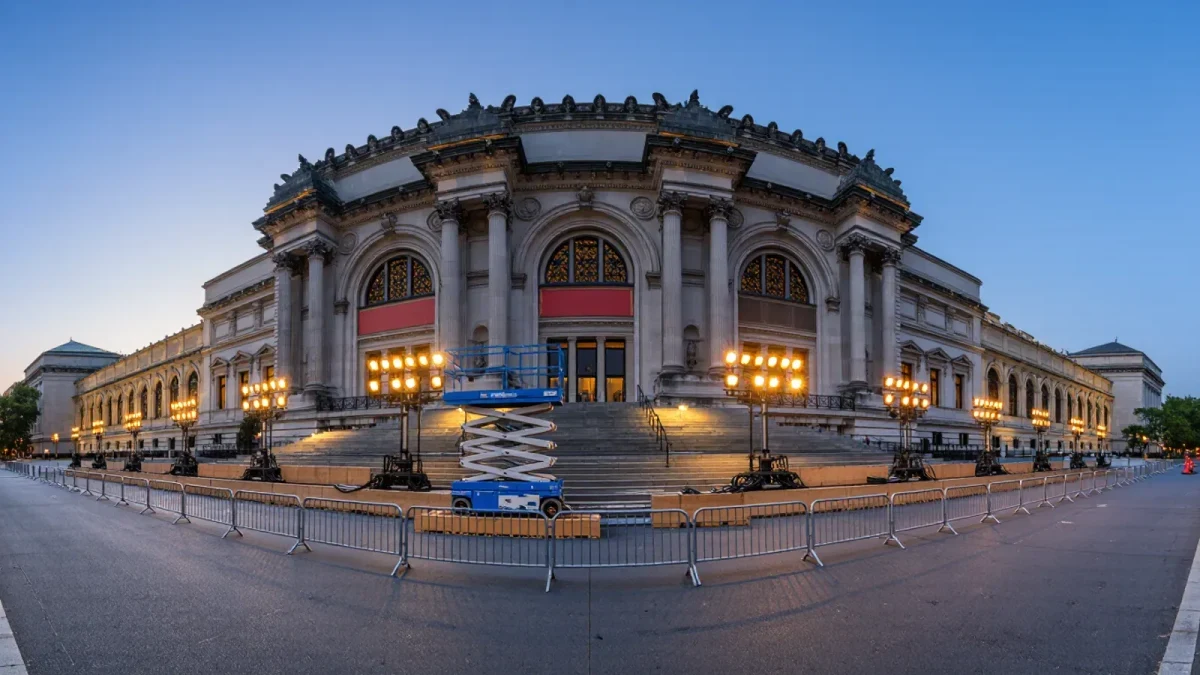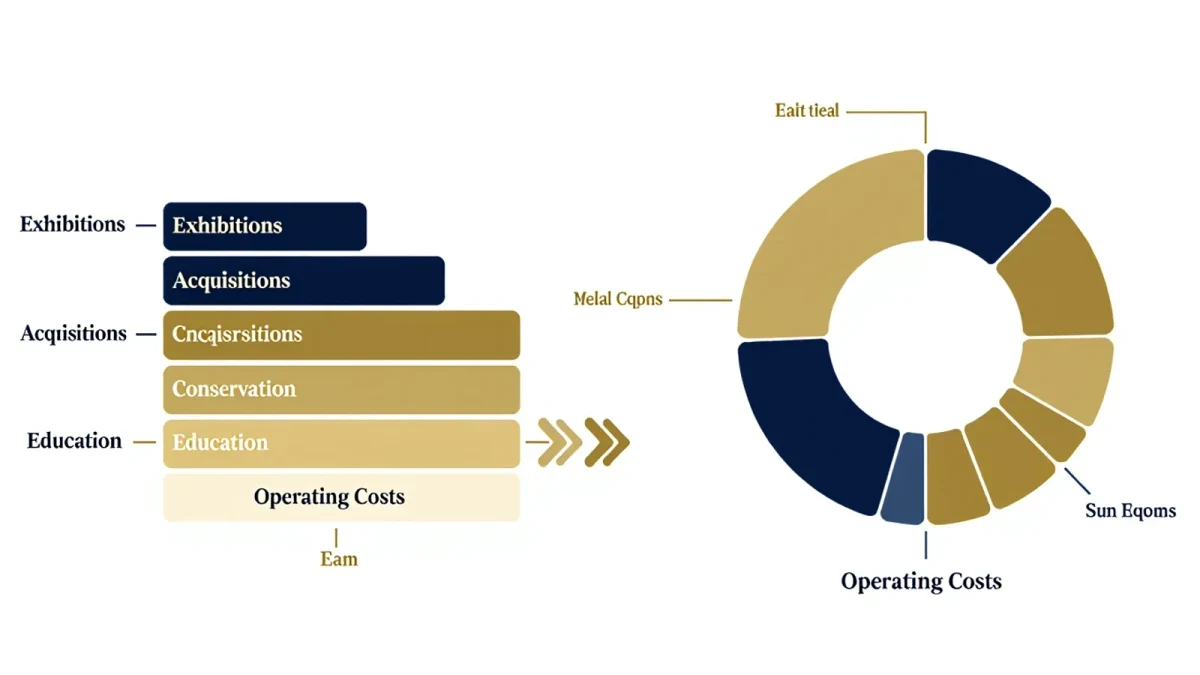
A museum gala funds three things: the program costs visitors can see, the behind-the-scenes work they cannot, and a slice of ordinary operations. At the Metropolitan Museum of Art, the annual benefit is the primary funding source for the Costume Institute — the museum's only curatorial department that must finance itself, per the Met, covering exhibitions, acquisitions, staff and conservation out of benefit proceeds and related giving. At most institutions the pattern is similar in miniature: one evening underwrites a year of programming that general admission and public funding do not fully pay for.
Where do gala proceeds actually go?
Into restricted and unrestricted buckets. Restricted funds flow to the department or program the gala names — an education wing, a curatorship, a wing renovation. Unrestricted funds, often the majority after event costs, go to general operations, which is why development offices prize galas: a dollar with no strings buys electricity as easily as exhibitions. Benefit announcements typically cite gross raised, while annual reports show net after catering, production and talent costs — a gap that can consume a third of gross at smaller events.
Which program lines do galas most often support?
Exhibitions come first. The show a gala celebrates is frequently the direct beneficiary: the Costume Institute's annual exhibition is funded by its benefit, per the Met, and these exhibitions rank among the most visited in the museum's year, giving the benefit a public-facing justification beyond the red carpet. Acquisition budgets come second — gala money buys objects for the permanent collection. Third are education programs: school visits, artist talks, community workshops that museums count in annual reports as audience served.
What share goes to operations versus programs?
It depends on the institution's disclosure. Nonprofits that file IRS Form 990 report functional expenses across program services, management and fundraising, and museums with audited financials publish the same split in annual reports. Well-run benefits commonly report net revenue of 60 to 75 percent of gross once venue, catering and production are paid, but that figure varies with ticket pricing and donated goods. Institutions that publish both gross and net — as several major museum foundations do in post-event announcements — make the arithmetic verifiable rather than rhetorical.
How much money are we talking about?
At the top end, the Met has reported gala fundraising in the tens of millions of dollars in recent editions, per the museum's post-event announcements, with individual ticket prices of $75,000 and tables of $350,000 as of the 2025 event. Mid-size museum benefits report net sums from the low hundreds of thousands to several million. The consistent structure matters more than any single number: tickets and tables cover the event's fixed costs, auctions and paddle raises add program money, and sponsorships underwrite production so more of the ticket dollar escapes the evening.
Who decides the allocation?
The institution's finance and curatorial leadership, not the guests. Gala proceeds enter the budget cycle like any other contributed revenue, and trustees approve allocations through the same process that governs endowment draws. Sponsor relationships can carry naming rights on specific programming — a bank underwriting an exhibition, a fashion house funding a wing — but the money still flows through institutional accounting, and the resulting spending appears in the annual report the museum publishes.
How can the public check what a gala funded?
Through three documents. The museum's post-event announcement states the gross raised and the named beneficiary. The annual report breaks spending into programs, exhibitions and education outcomes. And the IRS Form 990 — public for US nonprofits — shows total revenue, expenses and functional allocation for the year the gala occurred. Together they let an interested reader trace a gala dollar from the ballroom to the gallery wall.
Do galas ever fund endowments?
Yes, and increasingly so. Institutions periodically dedicate milestone benefits to endowment or capital campaigns, where proceeds are invested and only the draw is spent. The advantage is durability — a curatorial chair or conservation fund persists across funding cycles. The trade-off is that endowment galas produce no immediate program spending, which is why museums alternate them with annual-use benefits and say so in the invitation's fine print.
How do museum budgets create the need for galas?
Museums run on a mix of earned income — admission, retail, venue rentals — and contributed revenue: memberships, grants, endowment draws and events. Earned income rarely covers program depth; blockbusters subsidize scholarship, and fixed costs like climate control and security rise regardless of attendance. Galas exist because trustees and major donors respond to a collective deadline and a social occasion in ways they do not respond to an annual fund letter. One evening compresses a year of cultivation into a single ask, with the department's needs dramatized by the exhibition itself.
What role do sponsorships play in the total?
Sponsorships underwrite the event so tickets can fund programs. A presenting sponsor — commonly a fashion house, bank or luxury marque at cultural benefits — pays a premium package covering production, talent or decor in exchange for naming placement and brand association. Because sponsor dollars arrive before the event, they reduce the net cost the ticket revenue must cover, and corporations book the spend under marketing or philanthropy budgets depending on structure. Published sponsorship tiers at major benefits run from the tens of thousands for a listed partner to seven figures for presenting status, with benefits scaling from logo placement to tables and private previews.
How do education programs benefit specifically?
Education is the most common restricted beneficiary after exhibitions because it is measurable. Gala funding pays for school transportation, teaching artists, free admission days and community partnerships, and museums report these outcomes in units — students served, workshops held, families reached — that translate cleanly into donor materials. Several institutions dedicate their junior committees' proceeds specifically to education, which gives younger patrons a concrete story: their table money sends students through the doors the gala decorates once a year.
What happens in a year without a gala?
The 2020 shutdown provided the natural experiment. Museums that canceled benefits reported immediate seven-figure holes in department budgets, and the replacements — virtual programs, mail campaigns and scaled-back outdoor events — recovered only part of the loss, per institutions' subsequent annual reports. The episode clarified the gala's function in the funding stack: not the largest source of museum revenue overall, but among the largest flexible sources, arriving annually and mostly unrestricted. That is the quiet reason the format survives every critique of its cost.