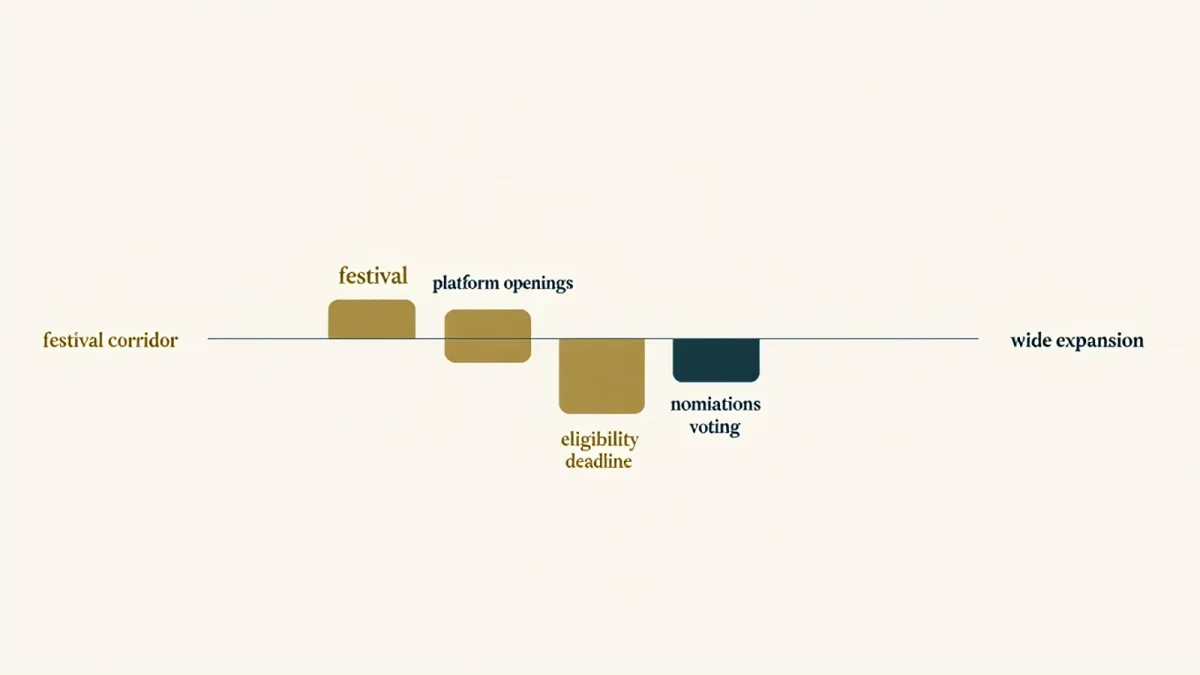
A competitive Academy Awards campaign costs studios an estimated $5 million to $20 million on top of a film's regular marketing spend, according to awards consultants and trade reporting. That money buys screeners, trade-paper advertising, talent appearances, event series and the strategists who orchestrate all of it. The season runs from festival premieres in the fall through final voting in late winter, and every week of it has a price.
What does an awards campaign actually consist of?
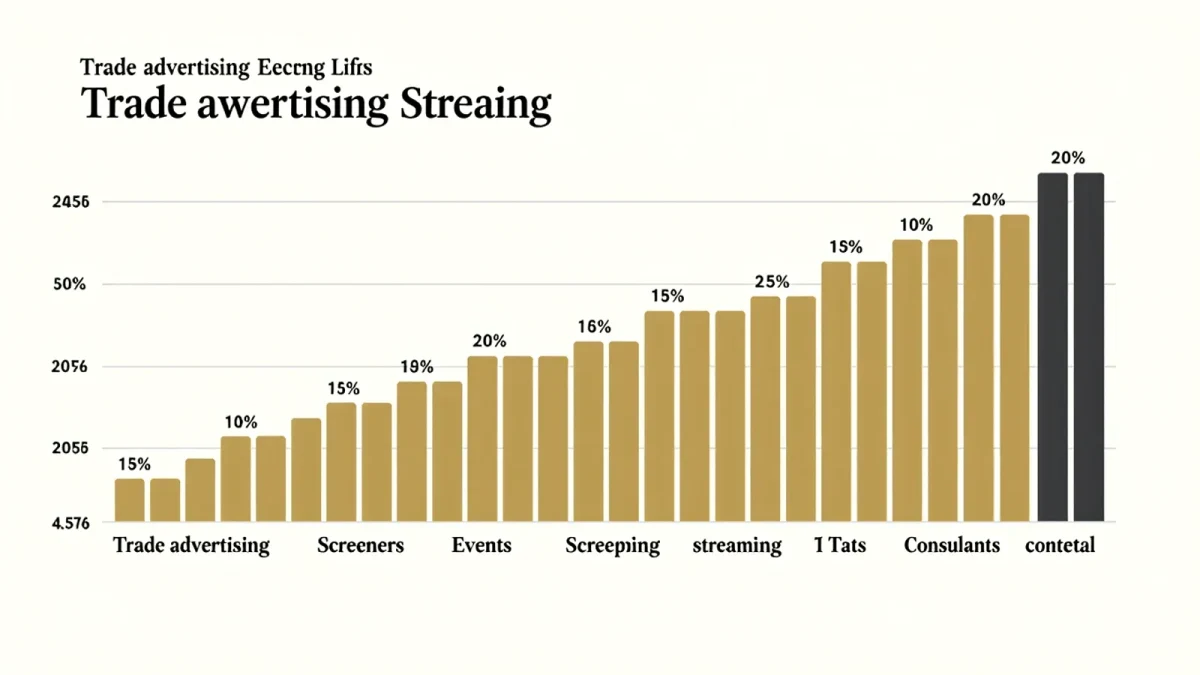
The work divides into four channels. Screeners and streaming portals deliver the film to voters. Advertising in the trade press keeps a title visible to industry decision-makers. Live events — screenings, Q&As, receptions — put talent in rooms with voters. And consultants manage calendar, messaging and expectations, deciding which awards matter as qualifiers and which to skip.
What are screeners and how much do they cost?
Screeners are copies of a film sent to awards voters, historically on DVD and now almost entirely through encrypted streaming platforms. Production, watermarking, distribution and platform licensing for a full voter outreach across the Academy, BAFTA, the guilds and critics groups is estimated by distributors in the low millions per title. Watermarking is individualized so that a leaked copy can be traced to a specific member, a lesson the industry learned after screener copies circulated online in the early 2000s.
Why do trade ads cost so much?
Because they are priced for a small, valuable audience. Full-page "for your consideration" ads in the industry trades during peak season have been reported at tens of thousands of dollars per placement, and a serious campaign books them repeatedly across weeks. The ads are not aimed at the public; they are aimed at the several thousand professionals who vote on awards, which makes the cost per impression enormous and, to strategists, justifiable.
What is the role of talent events?
Voters respond to in-person appearances. Campaigns stage screenings followed by moderated Q&As with the director and cast, both in Los Angeles and New York and, increasingly, in London. Talent fees are usually covered under contractual awards-season obligations, but the events themselves — venues, moderators, catering, staffing — are campaign costs. Publicists describe a season schedule in which a lead actor might do twenty to forty such appearances between September and February.
Who runs these campaigns?
Specialist awards strategists, usually former studio marketing executives or publicists, are retained per title. Trade reporting has placed retained consultant fees in the range of $50,000 to $250,000 per film, and studios frequently hire multiple firms — one for the overall race, another for a specific category push. Publicity firms, advertisers and the studio's internal awards team execute beneath that strategy layer.
How do guild and critics awards function as qualifiers?
Campaigners treat earlier awards as primaries. Critics groups and guild ceremonies — the producers, directors, actors and writers guilds — have voter overlap with the Academy and generate the momentum narratives that shape later voting. A campaign that wins a key guild prize shifts budget toward amplifying that win in ads and events; a campaign that misses recalibrates or, commonly, concentrates resources on a single category where a win is plausible.
What rules constrain the spending?
The Academy regulates contact with voters. Its rules prohibit direct outreach to members outside sanctioned channels, restrict the number of events after nominations and ban disparaging rivals — the provision invoked in rare, highly publicized disciplinary cases. Studios structure campaigns around these rules, routing contact through the Academy's own screening program and member events. Violations risk campaign disqualification, a penalty that has been applied in category-eligibility disputes.
Where does the money go, roughly?
- Trade advertising: frequently the largest single line, running into the millions across a season for a best-picture contender.
- Screeners and streaming: low millions per title for full-voter distribution and platform security.
- Events and talent logistics: screenings, Q&As, travel and glam, often seven figures across a season.
- Consultants and publicists: retained fees and hourly work spread across multiple firms.
- Mailer and collateral production: posters, brochures, playlistScore and digital assets for voters.
Why do streamers campaign differently?
Streamers have fewer constraints on spend because an awards win feeds subscriber perception rather than a box office line. Trade reporting through 2025 documented streamers outspending legacy studios on record-setting campaign pushes, including the reported nine-figure cumulative effort behind a best-picture winner in the early 2020s. Legacy studios counter that theatrical performance is its own argument, but in the race itself, budget asymmetry has reshaped the season's economics.
Is any of this spend auditable?
Very little. Campaign costs sit inside marketing budgets that studios do not break out, and consultants' fees are private contracts. The figures that circulate — $5 million as a floor, $20 million and up for a full best-picture push — are consistent estimates from strategists and trade reporting rather than disclosed totals. The Academy publishes rules, not spending.
How are below-the-line categories campaigned?
Craft categories run on targeted visibility. A cinematography campaign arranges guild screenings and trade profiles that speak to camera-shop voters; a sound campaign leans on mixer society events. The budgets are smaller — consultants describe below-the-line pushes in the hundreds of thousands rather than millions — but the mechanics are identical: screeners to the specific branch, events with the artists, and advertising placed where that branch's members already read. A craft nomination also feeds the best-picture push, since broad nomination counts become campaign talking points.
What happens after nomination day?
Spending narrows and intensifies. Final-round voting lasts only a few weeks, so campaigns concentrate on the events the Academy permits, screening series and heightened advertising frequency. Talent schedules tighten to the promotion circuit that doubles as voting-season visibility. Strategists describe the post-nomination phase as the most expensive per week: fewer days, more money, and every appearance weighted toward members who have not yet returned their ballots.
Do campaigns pay off commercially?
Increasingly, that is the justification. An awards win or nomination measurably lifts box office and streaming demand in the weeks after announcement — box office analysts have documented post-nomination bumps for contenders, and platforms report awards titles climbing their most-watched lists. Studios model that uplift against campaign cost. For smaller films, a single acting nomination can extend a theatrical run by weeks; for streamers, awards validate the subscription proposition. The campaign, in modern practice, is a revenue line with a receipt.