The Leonardo DiCaprio Foundation, founded in 1998, became one of the most consequential celebrity-led environmental funders in the United States, awarding grants across wildlife conservation, climate programs, ocean protection and indigenous rights. By the time its operations were folded into the newly formed Re:wild collaborative in 2020, the foundation and its partners had publicly reported grants exceeding one hundred million dollars. The record is documented in press releases, public filings and the successor organization's own reporting.
How did the foundation start?
DiCaprio established the foundation at 24, following his breakout years in film, initially focusing on endangered species and habitat. Early grantmaking was modest relative to what followed: small awards to established conservation groups, building the relationships with scientists and organizations that later defined its portfolio. The actor funded the foundation substantially from personal resources and dedicated fundraising proceeds from events tied to his public career.
What did the grantmaking cover?
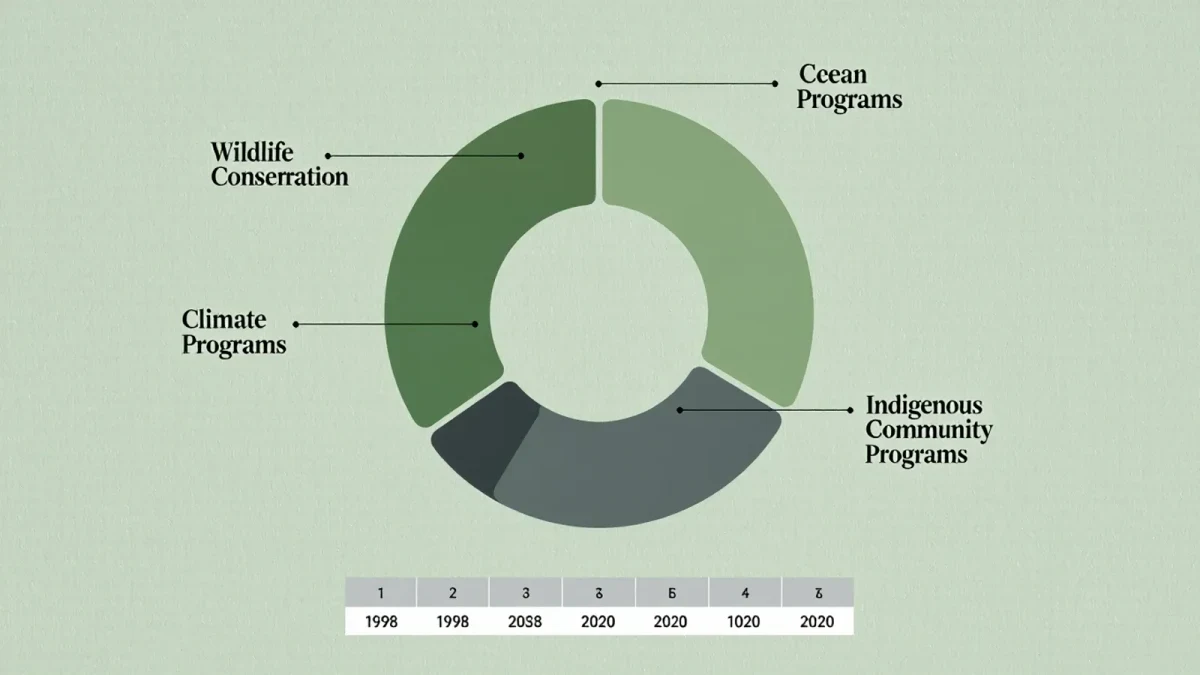
Four pillars dominated the portfolio. Wildlife and habitat conservation received the largest single share of the documented rounds. Climate and energy programs, including renewable energy transitions, formed a second pillar. Ocean and marine conservation, from protected areas to fisheries, a third. Rights of indigenous peoples and local communities, recognized within conservation as central to durable protection, grew into a fourth.
- Wildlife and habitat conservation: the largest documented allocation in major grant rounds.
- Climate and energy: grants supporting transition programs and policy work.
- Oceans: marine protected areas and fisheries initiatives.
- Indigenous and local communities: land rights and stewardship programs.
What are the documented grant milestones?
Public announcements chart the growth. In July 2017, at a climate-focused event in London, DiCaprio announced twenty million dollars in new grants to more than one hundred organizations, bringing the foundation's cumulative giving to a reported eighty million dollars since 1998. Earlier rounds reported figures above fifteen million dollars for conservation-specific portfolios, including designated amounts for wildlife and for ocean programs. Sector trackers compiling public filings and announcements put lifetime grantmaking above one hundred million dollars by the time of the 2020 transition.
Who received the grants?
Recipients were overwhelmingly established conservation organizations and coalitions rather than startups: major international conservation groups, marine protection alliances, indigenous-led federations and climate policy organizations. The foundation practiced regranting through partnerships, co-funding rounds with other philanthropies to enlarge individual awards. Grant lists were published in annual summaries and, as a US charity, through its public tax filings.
What happened in 2020?
The foundation ceased operating as a standalone grantmaker and its programs merged into Re:wild, a new conservation organization launched in 2020 with DiCaprio as a founding board member, alongside a group of scientists and conservation organizations. The merger consolidated his environmental giving into a permanent institution with a scientific advisory structure, ending the standalone-foundation era of the record.
By 2020, cumulative grants reported across the foundation's lifetime exceeded one hundred million dollars.
Has the criticism been answered?
Critics have raised two recurring points: that a jet-setting film career sits awkwardly beside climate philanthropy, and that announced totals deserve the same audit scrutiny as any large charity. The documented response is structural, disclosures through the foundation's public charity filings, published grantee lists and the move into an institution with external scientific governance. Donors and journalists can consult those public records, which remain the basis for every figure in this article.
What is the shape of the record?
Two decades, four program pillars, cumulative reported grants above one hundred million dollars, and a deliberate exit into a permanent conservation institution. Among celebrity environmental funders, that is a substantial, well-documented track record, and unlike most star philanthropy, its contours are public enough to check.
How did the foundation raise its money?
Unlike pass-through foundations funded by a single donor, DiCaprio's vehicle built fundraising machinery of its own: benefit events tied to his film premieres and the awards calendar, auctions of art and experiences, and co-funding partnerships with other philanthropists. These events, reported in the foundation's own materials, multiplied the actor's personal contributions and connected his film-world network, collectors, directors and executives, to conservation finance.
The co-funding model deserves emphasis. By structuring joint rounds with larger environmental funders, the foundation's grants arrived pooled, which increased the effective size of individual awards and aligned its giving with established conservation strategy rather than isolated pet projects.
What has happened since the Re:wild merger?
The record continues under a different letterhead. DiCaprio has remained a public face of Re:wild's campaigns, and the organization publishes its own grants and programs, carrying forward portfolio themes from the foundation years: rewilding landscapes, protecting indigenous territories and marine conservation. For accounting purposes, however, the standalone foundation's totals are closed, which is why this article's figures end at 2020 and why the successor organization's publications are now the primary source for current activity.
How does the giving sit within his broader public roles?
The environmental record intersects with DiCaprio's professional life in documented ways: documentary production on ecological subjects, United Nations messenger of peace appointments addressing climate summits, and platform lending at global climate events. These roles amplify the grants but are not grants, and the distinction matters when reading totals, a documentary he produced or a speech he delivered is advocacy infrastructure, while the documented figures in this article count money granted to organizations. Keeping the two separate keeps the record honest.
Why does this record matter beyond one actor?
Because it is the template celebrity environmental philanthropy now follows. The sequence, a personal foundation, focused program pillars, co-funding partnerships, then consolidation into a permanent scientific institution, has been repeated in outline by other entertainment figures entering climate and conservation funding. DiCaprio's version is simply the longest-running and the most fully documented, which makes it the case study: what two decades of star-led environmental grantmaking looks like when the paperwork is public.